

Many Indigenous women running businesses around Boulder say the support allies pledge for Native communities rarely reaches the neighbors selling goods at the farmers market or providing for their families day to day
By Emily Bernard
Boulder Weekly
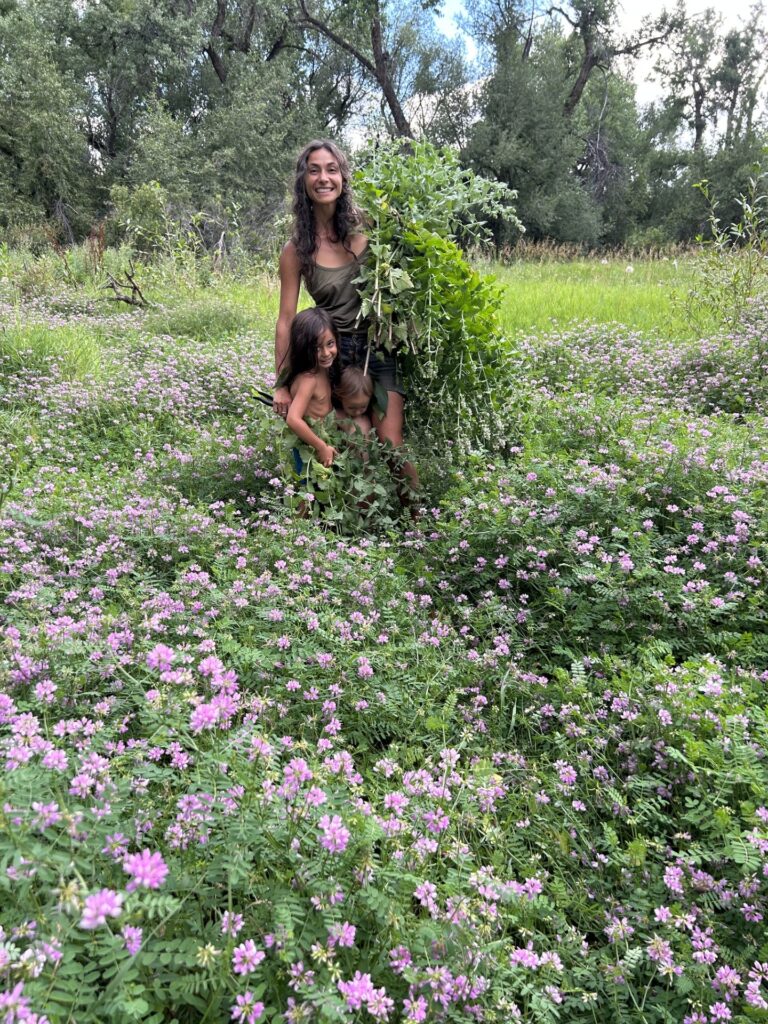
Maria Christina took the call from her backyard, the sun blazing behind her head, a wintering garden spilling across the frame. Every so often a child drifted into view, climbing close for a snuggle or asking a question she paused to answer. They were waiting for her to finish so the family could gather ingredients for the hot cocoa they would sell at the market.
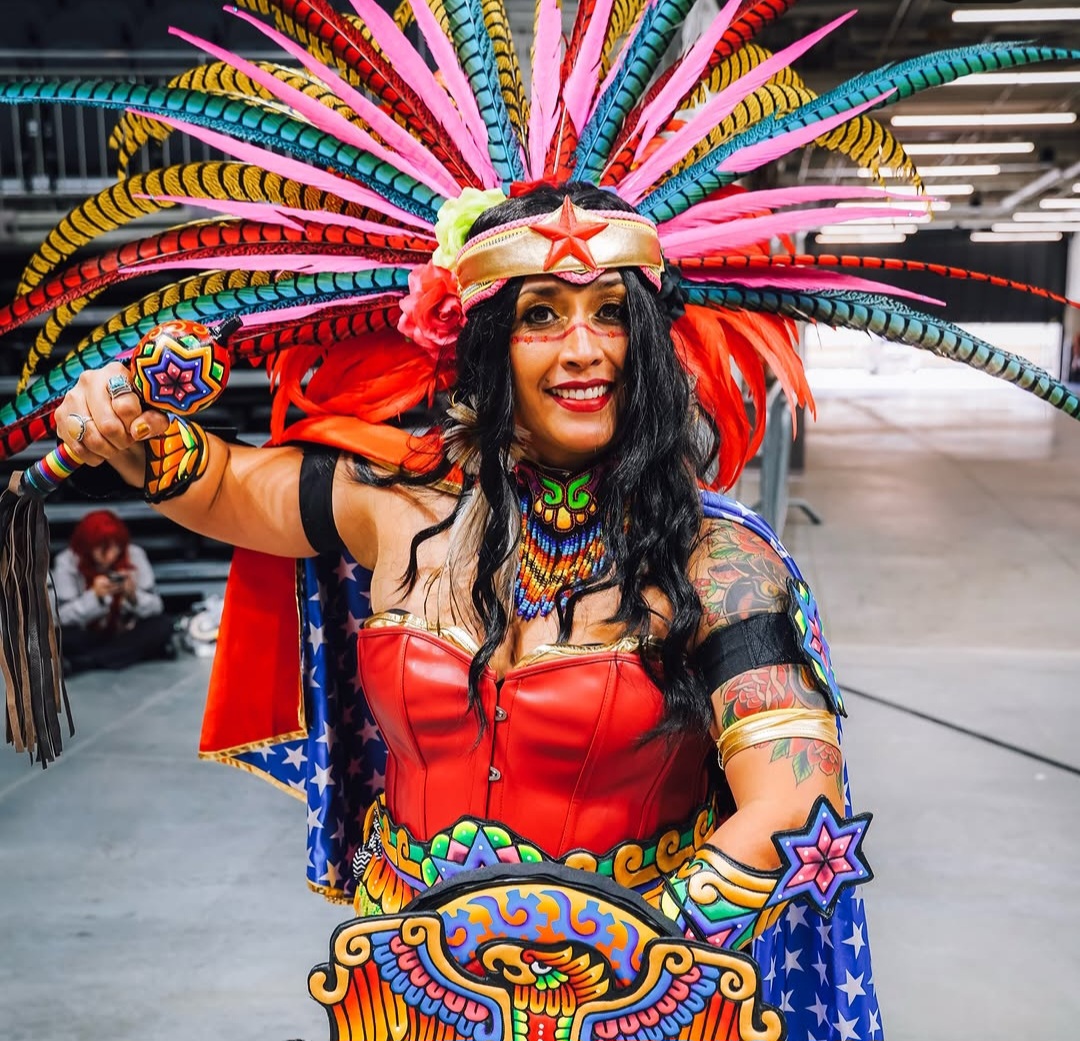
The other interviews unfolded much the same way, stitched into already crowded days. Cynthia Diaz spoke from a sedan between errands, beads hanging from the rearview mirror. Maya Sol Dansie leaned toward the camera from a shared office, holding steady eye contact. Adriana Paola Palacios Luna smiled through nearly every answer while her company's logo glowed behind her as a virtual backdrop. Mariamor Pazos sat among shelves of herbal creations, and Kristina Maldonado Bad Hand's laughter regularly interrupted stories about the young artists she mentors.
Their businesses look nothing alike.
One serves blue corn atole in Denver's Santa Fe Arts District. Another offers mental health care rooted in cultural tradition. Others teach art, grow medicinal plants, or sit with people through grief, birth and healing. Yet nearly every Indigenous woman interviewed for this story arrived at the same observation.
Colorado, they said, embraces Indigenous culture, from the art to the heritage months to the causes. What often goes missing is support for the Indigenous people living and working beside them.
The ones paying rent.
Raising children.
Trying to keep a business open in the state that applauds their culture.
"It's like this huge disconnect that people have," said Maria Christina, a medicine woman rooted in Mexica and Mesoamerican healing traditions, herbalist and founder of Mamitas Herbitas. "You don't realize there's people right in your backyard that are of Indigenous lineage that are just trying to provide for their families and you could be helping them directly here."
SUPPORT WITHOUT ACTION
Across the interviews, the pattern repeated, though not always in the same form. Larger organizations received funding while Indigenous experts supplied the trust and cultural knowledge. Practitioners described pressure to market work built on relationships through systems that rewarded visibility and self-promotion. Repeatedly, the women interviewed described support that celebrated Indigenous communities in theory but stopped short of sustained, local relationships.
Andriana Paola Palacios Luna, a Mexican Mestiza woman and founder of Luna Cultura, finds the problem can appear even in celebration. She uses art to build relationships across difference and aims to help people process hard experiences together creatively.
"How can we exchange those experiences and see how similar our cultures sometimes are?" she said.
Her observation echoed something several women described in different ways. Indigenous people are often encountered first as history, culture or symbol, and only later as contemporaries: business owners, parents, artists and neighbors.
MORE THAN A BUSINESS
None of these women described their work primarily as commerce.
Coffee shops become gathering places, art programs become sites of reconnection, and healing practices become rooms where people set down grief, trauma and questions of identity. Each carries social and cultural labor that never appears on a balance sheet.
Cynthia Diaz opened Tonantzin Casa de Café during the pandemic, when most public spaces sat empty, with a particular setting in mind: "their tía or their abuela's kitchen table." The menu draws on Indigenous and Latin American traditions, including blue corn atole.
"A cup of coffee or a cup of atole, a cup of anything at a table is a way for people to get together and work through ideas and build relationships and build community," she said.
But a café is also a reminder of who belongs in a neighborhood.
"I'm hoping that my coffee shop can be one of those places that's just a reminder of, hey, like we do exist," she said, looking through her windshield.
"We're still here."
WHAT COMES NEXT
Kristina Maldonado Bad Hand, who identifies as Sicangu Lakota and Cherokee, measures her work in people rather than sales.
As executive art director of Create áyA, she helps run Colorado's Indigenous Comic and Arts Festival and the Creative Nations gallery inside Boulder's Dairy Arts Center. The organization's focus is simple: creating pathways. Young artists are given opportunities to exhibit, curate and organize, then encouraged to see where those opportunities lead.
"A lot of it has to do with more providing pathways into different opportunities and seeing where that leads them," she said.
Sometimes it leads to leadership. Artists she first met at 11 or 12 years old now curate exhibitions of their own. One college student handles most of the gallery bookings as Creative Nations' Pathways Curator. Another former exhibitor now organizes art markets across Colorado.
The next generation of Indigenous creators is not waiting to emerge. They are already building careers, exhibitions and creative communities of their own.
For Mariamor Pazos, a Maya practitioner and founder of Sweet Medicine, healing began with a search that was larger than health.
Her family immigrated from Guatemala and Honduras, but like many immigrant parents, hers wanted their children to assimilate. Discussions of traditional healing, ancestry and cultural practices were largely absent from her upbringing.
"My parents really wanted me to assimilate and so they didn't really speak of their time growing up or any healing work that they did," she said. "I never really had that from my family itself."
After moving to Boulder, she found herself searching online for a Maya womb practitioner. What began as curiosity soon became something else.
"It was also a search for me to connect more with my lineage and my culture," she said.
The deeper she entered the work, the more she found herself grieving what assimilation had cost.
"When I would start receiving healings, I would feel just this grief of just like, my gosh, why haven't I had this my whole life," she said. The feeling, she explained, came from "the disconnection that happens as our family tries to assimilate and to come out of their culture."
Like several of the women interviewed, she described the work as deeply personal and often difficult to translate into systems that reward credentials, marketing and visibility.
Still, a way of life has to pay the bills.
THE COST OF BEING SEEN
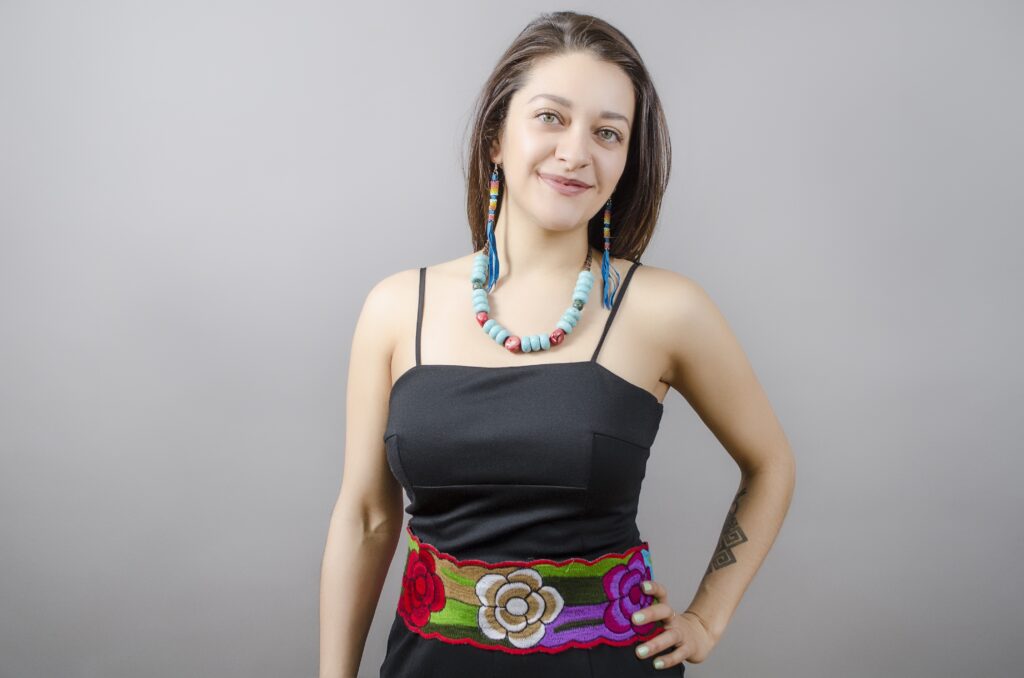
For Maya Sol Dansie, founder of Mayamotion Healing, a counseling and community wellness practice, visibility is not only personal. It shapes who receives funding, whose expertise is trusted and who gets a voice in public decisions. Her work incorporates Maya and Toltec frameworks, combining mental health care, community health and advocacy.
One of the most persistent challenges she sees is a lack of representation within mental health systems.
"It is very difficult for us to find clinicians of color, let alone clinicians of color who speak Spanish," she said. "And then beyond that, clinicians of color who speak Spanish who also understand the political context that we're rooted in."
Representation, she said, shaped her own search for care:
"Where do I see myself? And where can I find somebody that understands deeply my experience?"
She described a familiar pattern: larger agencies often turn to Indigenous practitioners when they need culturally responsive care or trusted connections to underserved communities, even as the grants and public funding tend to flow elsewhere. The imbalance affects not only resources but also who gets a voice in shaping care.
Across industries, the balancing act sounded familiar: keeping services accessible to the people who need them while generating enough income to survive. Building opportunities for others while finding resources to sustain the work itself.
ALREADY HERE
The challenge these women described was practical.
The solutions sounded practical too.
Hire the artist. Book the workshop. Refer the therapist. Buy the atole. Pay a fair rate. Recommend the business to a friend. None of it requires a grand gesture. It requires recognizing that Indigenous communities are not somewhere else. They are here.
Independently and in remarkably similar language, the women interviewed described the same disconnect between the support many Coloradans say they want to offer Indigenous communities and the support they extend to Indigenous people in their own neighborhoods.
The artists, healers, organizers and business owners they spoke about were not distant figures from a history book or a reservation far away. They were mentors, farmers, therapists, coffee shop owners and parents trying to build sustainable lives in Colorado.
As the conversations ended, Maria Christina's children were waiting in the garden, ready to gather ingredients for the cocoa they would help sell at market. The work these women described was rarely symbolic. It was making medicine, mentoring young artists, counseling clients, teaching workshops, raising children and keeping businesses alive.
They were not asking to be discovered.
They were asking to be recognized.
"We're not an old myth or legend," Maria Christina said. "We're not history. We are living."
INDIGENOUS WOMEN-OWNED BUSINESSES TO KNOW
- Ch'il Indigenous Foods, Narissa Ribera, Wheat Ridge. Diné woman-led, plant-based catering and takeout business rooted in traditional Indigenous plant foods used as medicine. chil-indigenousfoods.com
- Four Directions Cuisine, chef Andrea Condes, Arvada. Indigenous Venezuelan woman-owned private chef and catering company. fourdirectionscuisine.com
- Lakota Body Care, Haleakala Brown, Aurora. Native American woman-owned and operated, described as Colorado's first Native American soap company.
- Dzabahje Jewelry, Denver. Diné mother-daughter jewelry business that describes itself as "a woman owned small business." dzabahe.com
- Istonish, Annette and Victoria Quintana, Greenwood Village. Native American and woman-owned IT services and consulting firm founded in 1990. istonish.com
- Bear Woman Enterprises, Denver. Native American woman-owned supplier and federal contractor founded in 2011. [email protected] or 720-443-8009
- Harvest of All First Nations, Andrea Nawage, Boulder. Native American-owned and woman-owned nonprofit centered on Indigenous food sovereignty, rematriation and Earth-based decolonization. hafnco.org
For readers who want to find more Native-owned businesses in Colorado, the Rocky Mountain Indian Chamber of Commerce is a good starting point. More information is available at rmicc.org.
UPCOMING MARKETS, EXHIBITIONS, AND WORKSHOPS
- Sunday, Nov. 29: Create áyA winter pop-up market, Dairy Arts Center, Boulder, 10 a.m. to 5 p.m.
- Saturday, Dec. 5 and Sunday, Dec. 6: Boulder Winter Market, Longmont. Mamita's Herbitas will sell herbal hot chocolate.
- Through March: Luna Cultura community art education workshops.
- Fourth Saturday of each month: Sewing Revolution with Luna Cultura at the Boulder Public Library.
- March: AYACON vendor applications open.
- January: Native jewelry and stone narrative exhibition at Creative Nations during the Sundance Film Festival.