
The city of Boulder offers new sustainability options for the Sundance Film Festival and CU Boulder graduate students are tasked with the challenge to measure the festival’s environmental footprint.
By Evan Borman
Boulder Weekly
CU Boulder’s Master of the Environment program is at the center of a collaboration with the Sundance Institute, the city of Boulder and CU Boulder’s office of the Vice Chancellor to measure the environmental impact at the 2027 Sundance Film Festival.
The collaboration is led by second-year Master of the Environment students Rose Hickey, Mathieu Entriken, Kaila Hood and Olivia Yuan.
“Our role with this project is to create an impact framework assessment to be able to measure the impact of the festival within Boulder, Colorado for the next 10 years,” Entriken said.
Amy Dunbar-Wallis is the program manager for Sustainability Initiatives in the Office of the Vice Chancellor for Sustainability at CU Boulder and has been working with the city of Boulder director of Climate Initiative, Jonathan Koehn to foster a shared environmental vision throughout the festival.
“It is really important and a core value that both the city, the university and Sundance share together which is, how do we create the next evolution of how you put on a big festival? What
does it mean when you bring people to a community? How do you minimize the negative impacts and amplify the positive?” Koehn said. “We want to bring one the world’s most celebrated film festivals to life in a way that really sets a new standard for sustainable community-rooted events.”
The MENV students are working to establish a climate and sustainability baseline for the festival’s first year in Boulder.
“Rather than comparing to previous years, when the Sundance Film Festival has been in Park City, we’re starting fresh with their relocating to Boulder to really understand the full scope of their impact,” Hood said. “We’re looking at associated emissions but also looking at what are some of the broader impacts that they might be able to evaluate more connotatively in the future.”
The MENV students are studying sustainability reports of other large-scale festivals to create a framework for evaluating the environmental impacts across greenhouse gas emissions, transportation, venue energy, waste and materials.
“Temporary events are such a unique place to try to measure the impact because they don’t have a permanent infrastructure,” Entriken said. “To be able to pinpoint accurate numbers that are useful for building the picture of the impact to start to enact change and make decisions based on the data you have because of consistency and accuracy has been the focus.”
The MENV students are developing a preliminary emissions model that documents data sources, assumptions, attribution methods and uncertainty. The project will build tools for future measurements for data collection protocols and sustainability indicators.
“The city of Boulder and CU both have really incredible zero waste programs already,” Dunbar-Wallis said. “Understanding how those already work and then testing it on this large festival in learning about what we can do better in future years, how we can make things more sustainable and have better impacts for everyone involved.”
One of the primary reasons for the Sundance Film Festival’s move to Boulder was the pre-existing public transit infrastructure, the city's walkability and ability to minimize the environmental footprint. Boulder’s multi-corridor transportation network varies greatly from Park City, Utah’s one road in, one road out that led to a variety of transportation delays and parking difficulties.
“All of that is backed up by making sure that we have great information for festivalgoers around walking, biking, rideshare and private charters. All of that is building on a structure we already have in place and that we’re good at,” Koehn said.
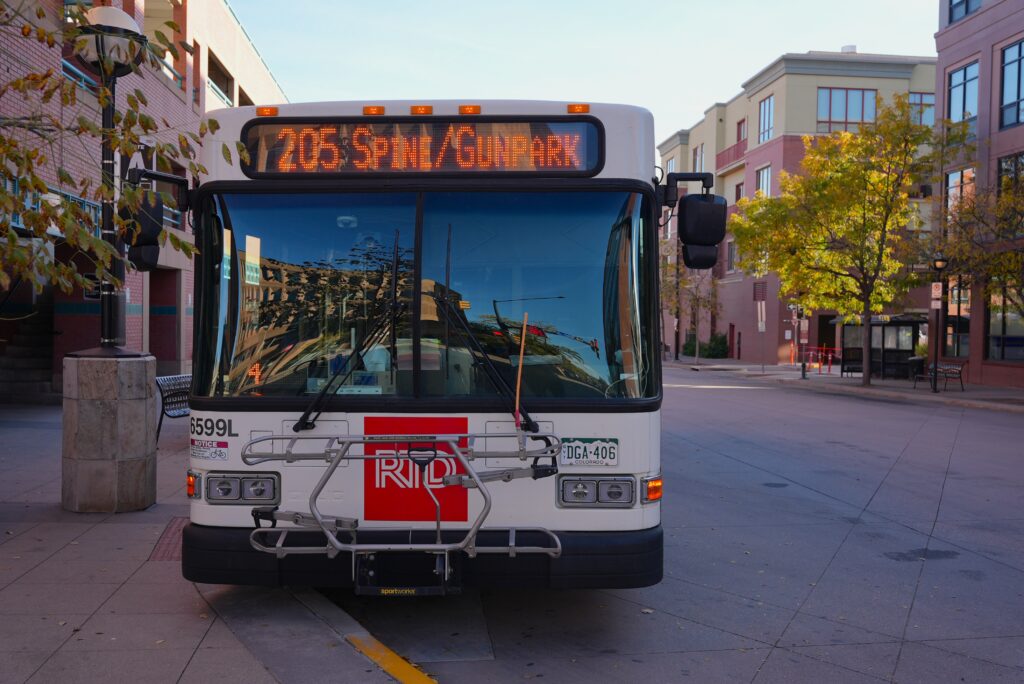
Boulder and the surrounding regions have a multimodal transportation network that is capable of supporting the demand of a large festival. The Regional Transportation District operates bus
services that connect Boulder to Denver International Airport and neighboring cities such as Denver, Longmont and Lafayette.
“They estimated that a third of attendees in Utah were from the state and so if that remains true here, maybe you have people introduced to public transit systems they weren’t previously familiar with and that actually drives more consistent transit ridership over the long term,” Hood said.
The city of Boulder plans to provide free local bus services on Boulder’s HOP bus route as well as 5,000 shared e-bike passes for festival attendees. Festival transportation includes local buses serving festival venues every 10 to 15 minutes, free transit on the HOP, SKIP, JUMP and CHAT network and expanded late-night and early morning service.
“Beyond just moving around in Boulder to Denver or to Fort Collins, there’s also really great bus opportunities if someone wants to leave and recreate while they’re here. Taking the bus up to Nederland, taking the bus to the national parks. Beyond just having a car, you can also go explore further in Colorado,” Hickey said.
The city of Boulder has a longstanding commitment to sustainability programs and planning and will oversee localized guidelines for waste diversion at the festival. Events like the CU Boulder Family Weekend and Creek Festival inform waste management planning during high-visitation periods.
“We have volunteers who are there and ready to support those kind of events and festival goers in understanding how they store waste, where they store waste, how do we minimize the waste both in terms of what’s being served on site and how do we think about it from a holistic way with vendors,” Koehn said. “This is not Boulder or the university putting new requirements or restrictions on Sundance. This is a true partnership and I want to make sure that you hear that we all share this value.”
“This is an opportunity to change culture and that is what Sundance is about. When you think about social impact, that is one of the reasons that we have become good partners in this area,” Koehn said. “We will have thousands of people in shared spaces and that creates a really cool platform to shift some social norms and to promote some different mindsets that I think we’re building together.”
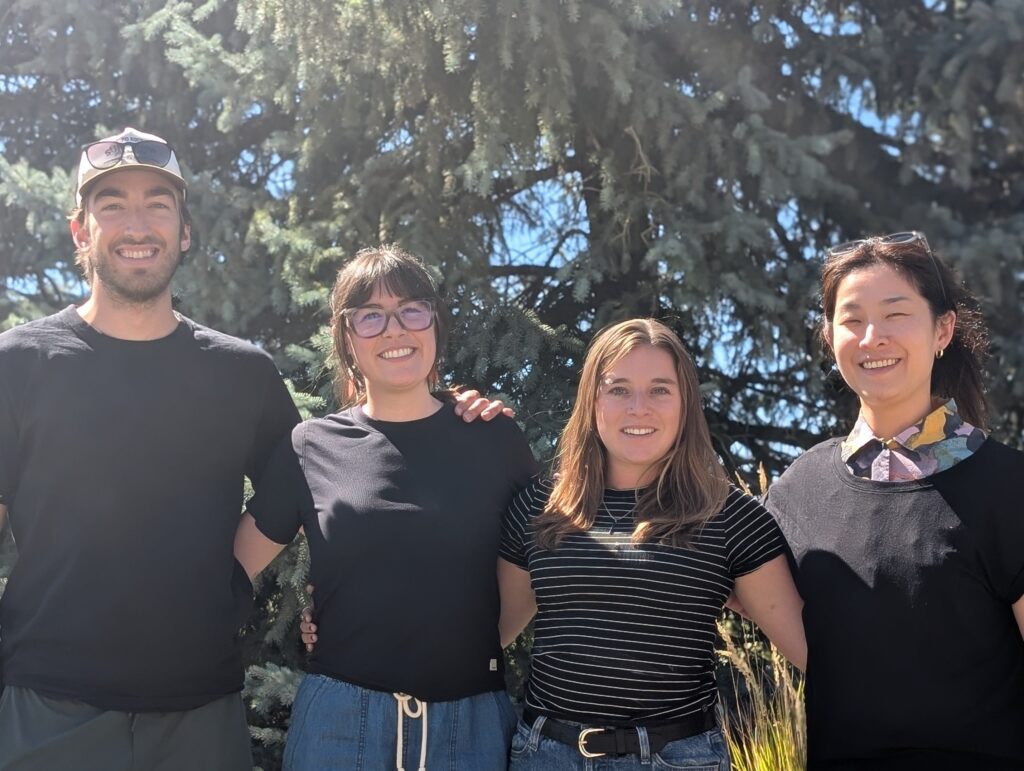
The CU Boulder Master of Environment Sundance Film Festival sustainability project team. From left: Mathieu Entriken, Kaila Hood, Rose Hickey and Olivia Yuan. Courtesy of Amy Dunbar Wallis.