

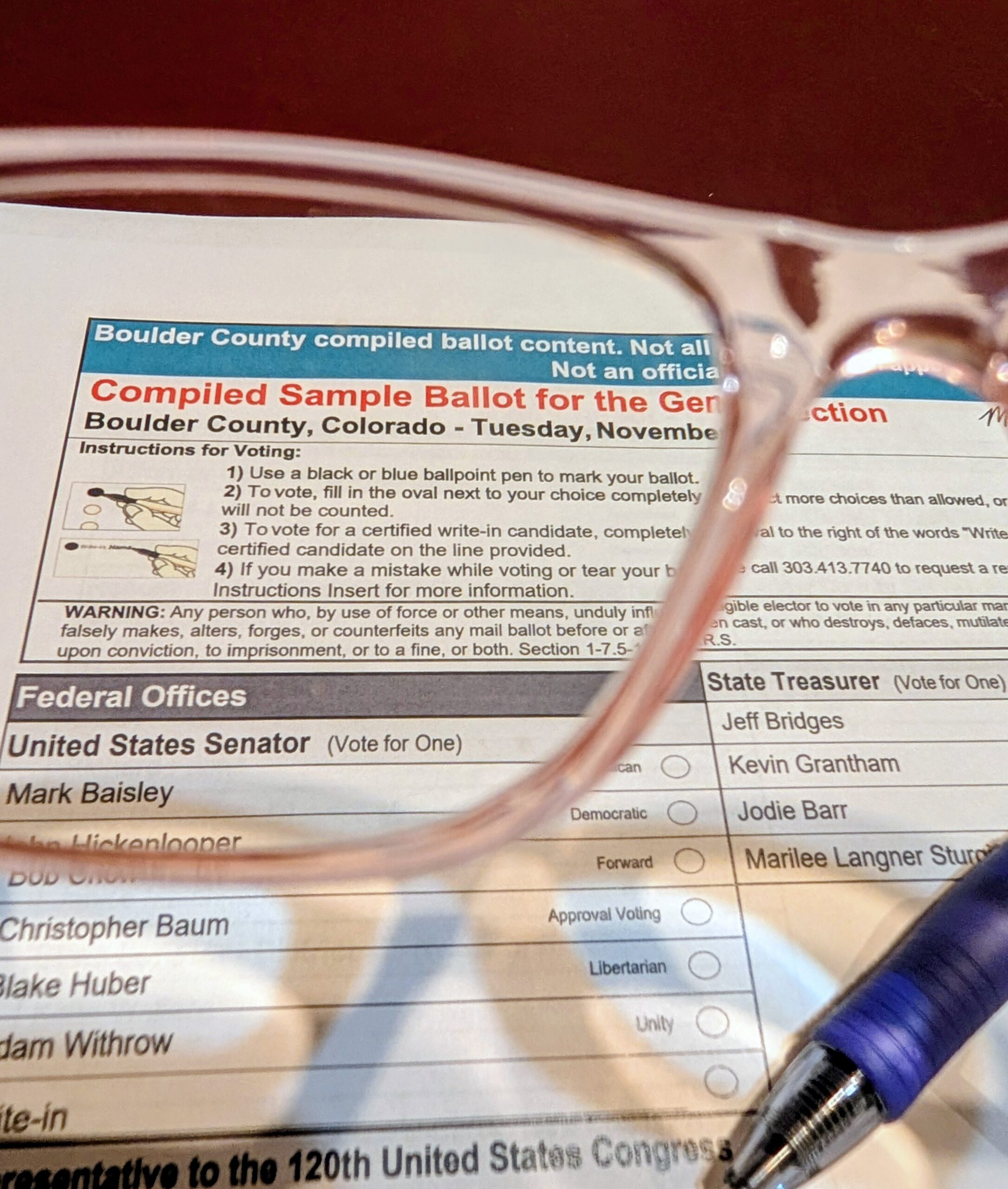
Locals encouraged to get involved
By Ava Henrickson
Boulder Weekly
Boulder County election workers are already hard at work processing early voting ballots.
The Clerk and Recorder’s Office collects the votes from drop off boxes around the county and prepares them, in several steps, to be run through a scanner and counted. It all happens at the Ballot Processing Center on 33rd Street in Boulder.
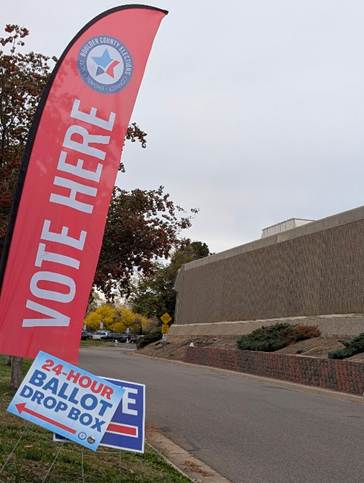
The Ballot Processing Center is located near the Boulder County Clerk and Recorder’s Office, on 33rd Street.
The two-story center has an industrial hospital vibe, with just a touch of a prison thrown in. The high ceilings contain ductwork and pipes, all painted a crisp, clean white, capturing a sense of sterility. Fencing around certain areas, windowed rooms, locked gates and doors and badge-entry only screams of security, as do the cameras watching over the workers.
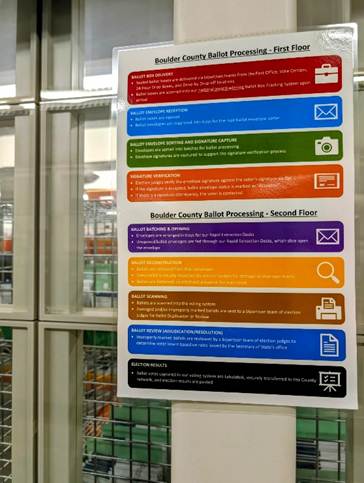
The process for processing ballots at the center is outlined on the wall at the center.
The ballots are brought in to the first floor of the secure area by certified bipartisan election workers in locked bins. They are sorted by machine according to geographically region, then each signature on the envelope containing the ballot is scrutinized by a human, who compares it to signatures collected in past elections or those on record with the clerks office.
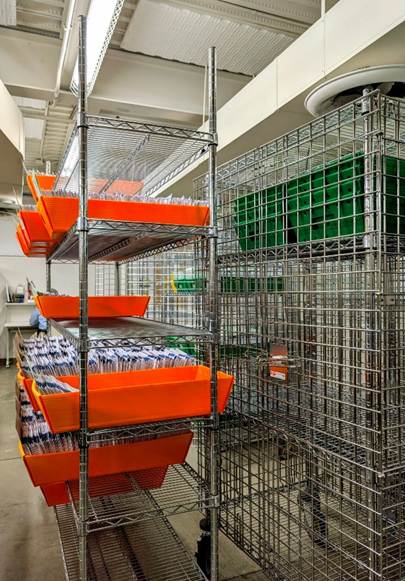
Bins hold sorted ballots on the first floor of the Ballot Processing Center.
It’s this part of the process that can cause young voters some grief. If you don’t have any or only a few signatures on record to compare the signed envelope to, your ballot is kicked out of the counting pile and a letter is mailed to you, asking you to verify your ballot was sent in and that the signature is yours.
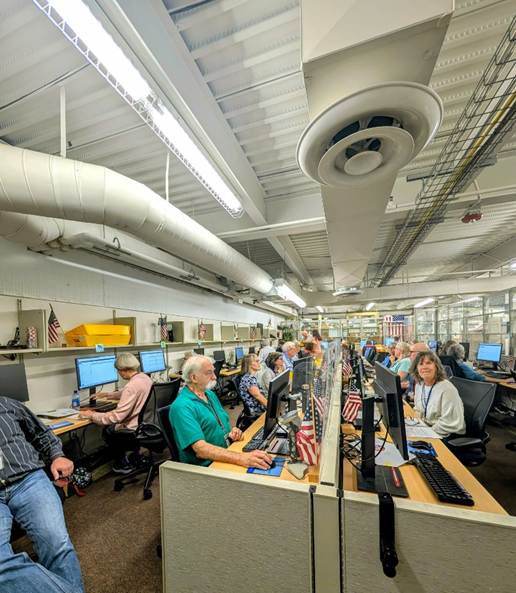
Humans, also known as bipartisan election judges, compare voter signatures to a database of collected signatures during the ballot processing process.
“We really want young people to understand that they need to be on the lookout for a potential signature discrepancy letter from our office letting them know to let us know that that was them,” explained Boulder County Clerk and Recorder, Molly Fitzpatrick. “Because they still have the opportunity to have their ballot counted, they just have to take that extra step with our office to do so.”
Those young people, in addition to the elderly and others who have changed their signature over time, are encouraged to submit copies of their current signatures to the Clerk and Recorder’s Office. The instructions for how to do so are on their website.
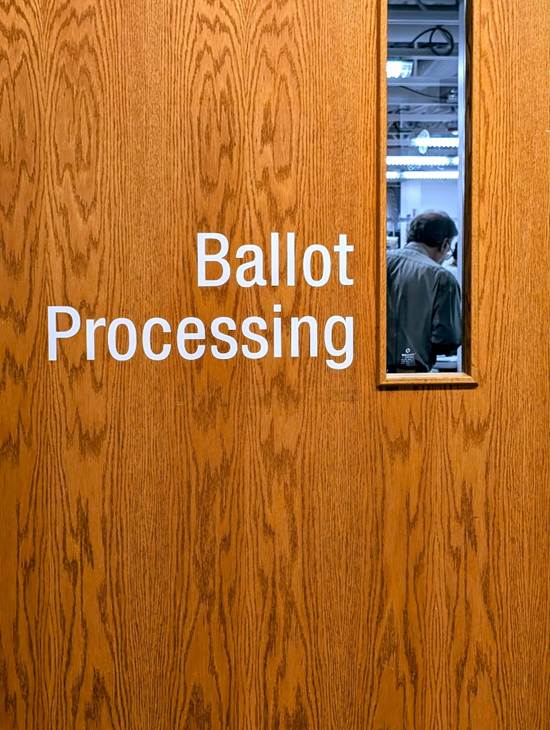
Only certain election workers have access to the upstairs area of the Ballot Processing Center.
After the votes are sorted and the signatures checked, the ballots are then sent to the upstairs area of the center. There, a machine slices the envelopes open and a human checks each ballot for anything that could cause it not to scan properly in a counting machine. Things like a rip in the ballot, taped up areas or a wine or coffee stain cause those ballots to be kicked to the side. Bipartisan workers recreate the ballot to ensure it can be counted.
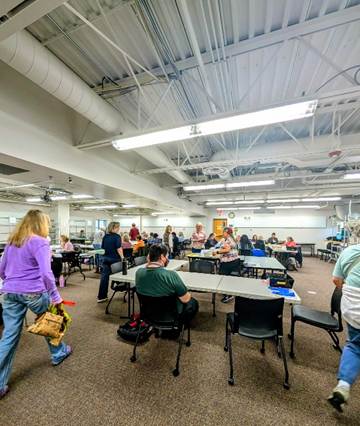
Election workers smooth out ballots and check for anything that could cause problems for the vote counting ballot scanners.
It’s at this step that humans also unfold the ballots and smooth the creases for a clean scan. The envelopes are separated from the ballots, so they no longer have voter identifying information on them.
The ballots are now ready to be scanned and counted by machines that are purposely not connected to the world wide web to prevent tampering. The machine will recognize and kick out any ballots that are double marked for the same candidate, or in cases where there were extra candidates, chosen to fill a set number of seats, for example.
Those ballots are then interpreted by election workers, a Democrat and a Republican, and the votes are recreated and counted according to the interpretation of what the workers think the voter meant.
This is where it’s important to follow the instructions of how to correct your vote when you make a mistake on your ballot, so your intent is clear and not subject to human interpretation.
The whole process takes hundreds of workers each election, and half of the jobs are available to Republicans and half to Democrats. Their names come from the parties themselves, chosen during the caucuses.
Because there are so few registered Republican voters in Boulder County, the hiring process is opened to voters who are unaffiliated. The parties don’t historically provide enough workers to staff the election process, so the county looks to those who have worked for them before and even borrows workers from more conservative counties like Weld. Weld Country will in turn borrow some of Boulder County’s liberal workers, to create a bipartisan balance.
The county really would like to see more young people get involved in the process. Right now, it’s mostly retired folks who staff the elections.
There are other ways to be involved within the democratic process, including being a watcher.
Watchers are also always welcome to come in and observe the ballot processing for themselves.
“We love to have as many people involved in this process as possible,” Fitzpatrick said. “Political parties are responsible for appointing election watchers and so if you are a registered Republican or a registered Democrat, we tell folks to get in touch with their political party and sign up to become a watcher.
“It’s great because it can happen on a timeline that’s convenient for that person. They can pop in for an hour or stay for the whole day and move about the facility and see different parts of the process. It’s a wonderful opportunity,” said Fitzpatrick.
The office is doing tours of the center for voters each week leading up to election day, and even the day after the election, as they continue to count ballots.
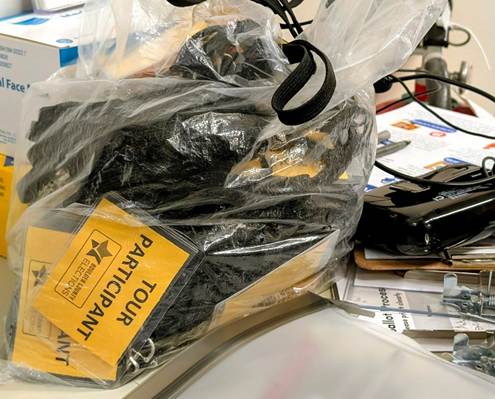
Boulder County Clerk and Recorder’s Office is providing tours of the Ballot Processing Center during the week leading up to the election.
They are also holding Election Champion events, where they educate the public on the entire election process and answer questions. They want the public to see just how transparent elections are in Boulder County.
“We walk them through what’s true, what’s not true… those trainings are designed to empower people about what’s the role of the federal government, what’s not their role, why they can feel confident about elections,” said Fitzpatrick.
For a list of the champion events and times for tours at the ballot processing center, go to the Clerk and Recorder’s website.
To register to vote, go to the Secretary of State’s website.
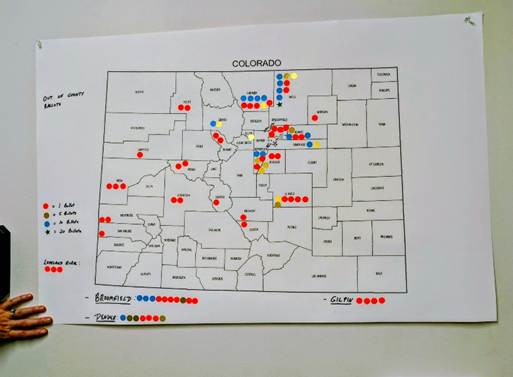
Boulder County sorts out ballots that are meant for other counties and sends them along to the correct county. This map shows where the ballots were sent to in this election so far.
"Click here"
Boulder County Clerk and Recorder’s Election Division: https://bouldercounty.gov/elections/
Colorado Secretary of State: https://www.sos.state.co.us/voter/pages/pub/home.xhtml