

Longmont Rides E-Bike Trend
LONGMONT | Getting around Longmont on two-wheels is a more viable option for those wishing to pedal between destinations.
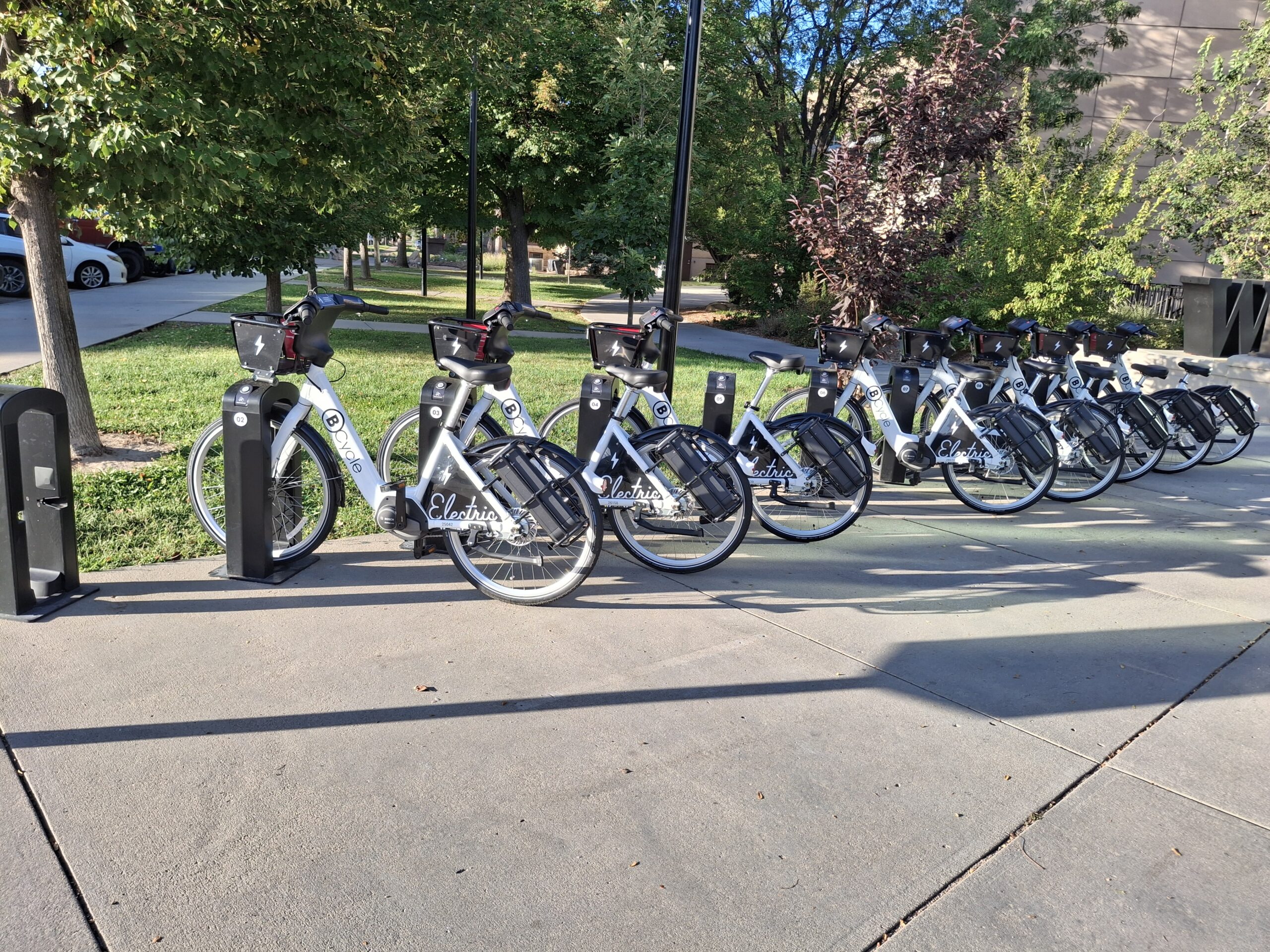
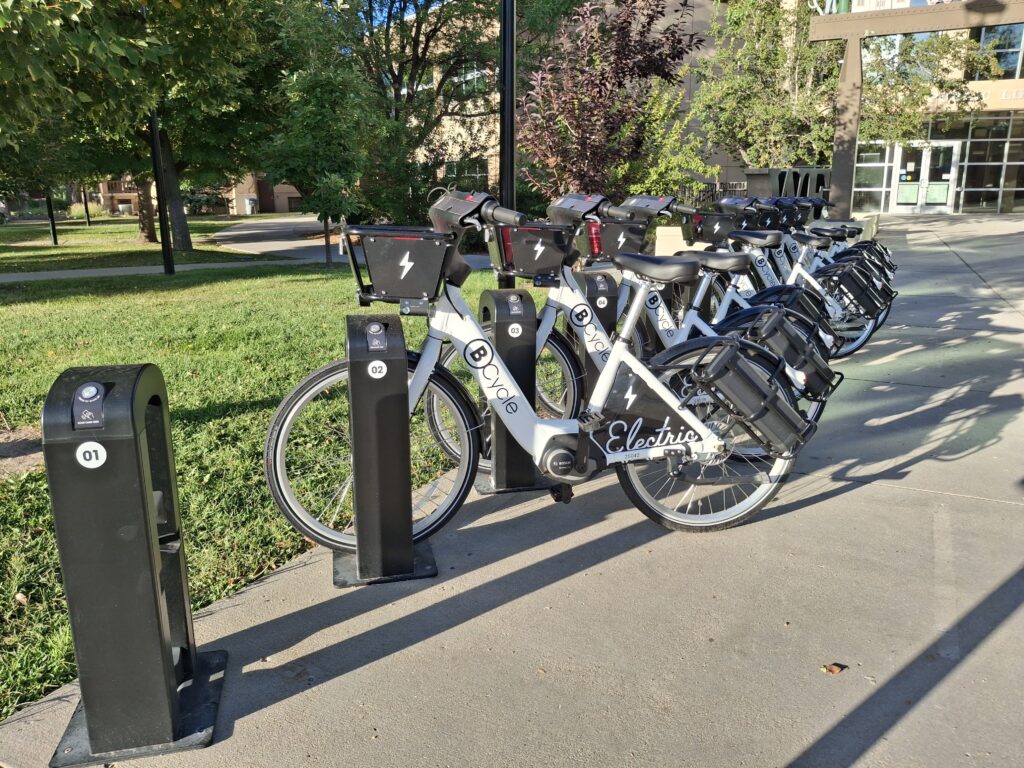
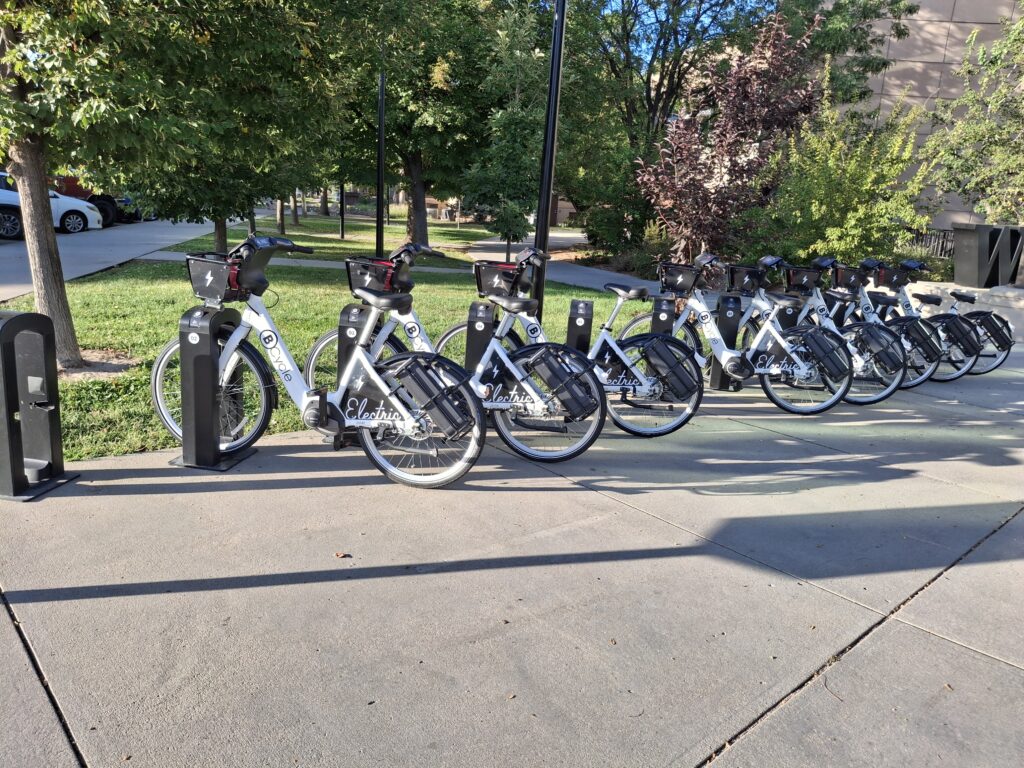
In about one-month’s time, residents of and visitors to Longmont checked out the city’s new electronic bikes over 200 times. Longmont rolled out its new public electric bike share program in July, after installation of 5 docking stations for the nearly 30 e-bikes by BCycle.
The e-bike program is funded by a $1.5 million grant from the Colorado Energy Office’s Community Accelerated Mobility Project. Longmont is the first city in the state to use the grant money for the program. One of the goals of the project is to connect communities across the area with bike trails and docking stations in different cities.
The city of Longmont partnered with Boulder County, Broomfield, Lafayette, Superior, Westminster, and Commuting Solutions to secure the funding. Longmont received roughly $379,000 for equipment and operations and contributed a local match of about $21,445 from its Street Fund Tax.
According to Kalie Fallon, Transportation Planner for the City of Longmont, the regional expansion of BCycle has been in the planning stages for over a decade, tracing back to a 2013 transportation planning study.
“We at Longmont have been collaborating with all of our regional partners on how that expansion would work and what that might look like,” Fallon said. “We’re certainly still working really closely with those partners and sharing those lessons learned in real time. And we’re able to kind of adjust our program as needed with the partners.”
The City of Boulder has had BCycle e-bikes in their city for over 15 years, Although Boulder does not benefit from this specific grant, its existing BCycle system allows for regional connectivity.
To use the bikes, riders must download an app and pay for a pass, picking up the bike at a docking station. You have to return the bikes to either the same or a different docking station, to avoid having loose bikes abandoned all over the city.
“When you’re ready to end your trip, you have to put your bike into the docking station. It’ll click and lock, and it’ll officially end your trip,” Fallon said.. “If a user doesn’t do that, they do get charged. After a certain amount of time, then the bike is considered abandoned. So, there is that incentive for people to end their trips at that docking station.”
The supplier, BCycle, manages all operations, including rebalancing docks and addressing abandoned bikes via GPS tracking. If riders can’t find an available dock at their preferred docking station, they will need to contact BCycle customer service.
The program is also anticipated to help with pollution and poor air quality, as seen in the nearby Denver area. In July of this year, Denver was named the most polluted city in America. The Denver Regional Council of Governments recently found that drivers are embarking on trips under two miles by themselves more than a million times a day in the metro area. Longmont’s goal is to prevent a similar fate, and offer visitors and residents more affordable and reliable options for transportation, especially to and from public transportation.
“We’re really trying to … place those stations in areas that are connected to transit to serve those first and final mile connections,” said Kalie Fallon, Transportation Planner for the City of Longmont.
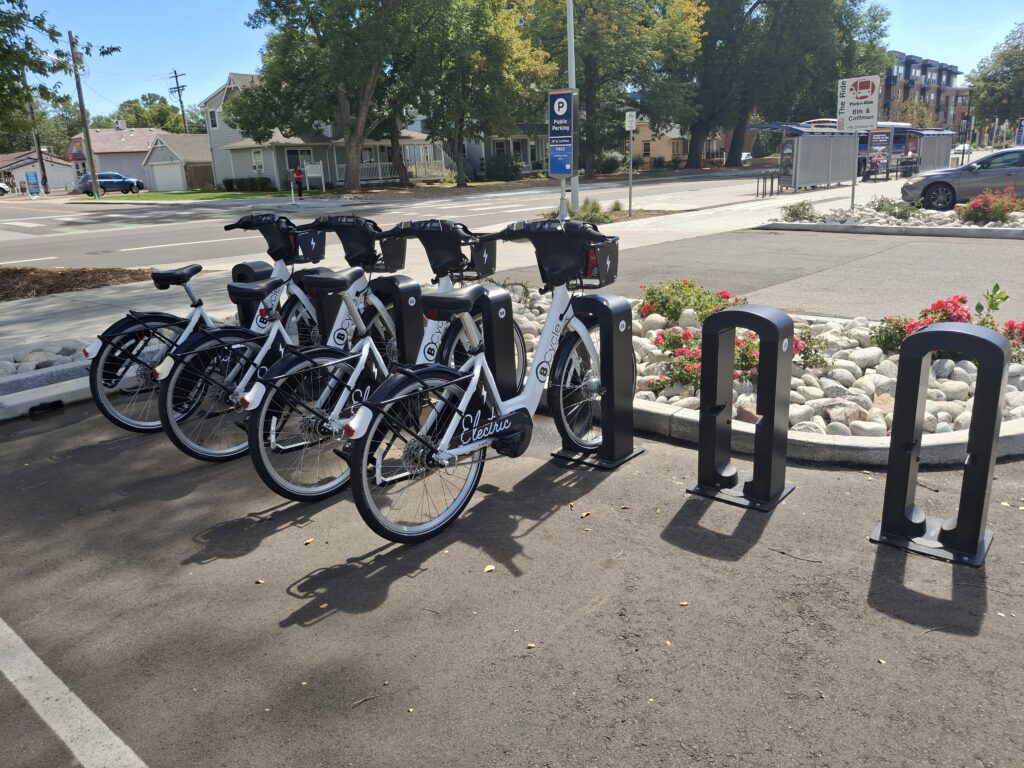
Those locations include the 8th and Coffman Park-n-Ride, Longmont Public Library and Longmont Recreation Center.
Longmont residents may remember that the city previously operated a Zagster bike-share program with conventional bikes from 2017 until it was discontinued in summer 2020 due to COVID-19 impacts. This is the city’s first e-bike share, and its first system designed for multi-city travel.
Success for the city will be measured by the utilization rate, specifically trips per bike per day. Data collected from docking stations will help planners determine if station placements meet user needs or if adjustments are required as the system matures.
“The feedback from the community has been really positive. People are really excited about it, and we’re just excited to see how it continues to grow throughout the years,” Fallon said.
Full regional connectivity across all partner jurisdictions is estimated for mid-2027. A sixth station near Colorado Highway 119 and Hover Street is expected around late 2027 after a large construction project concludes.