

By Lewis Jolly
Boulder Weekly
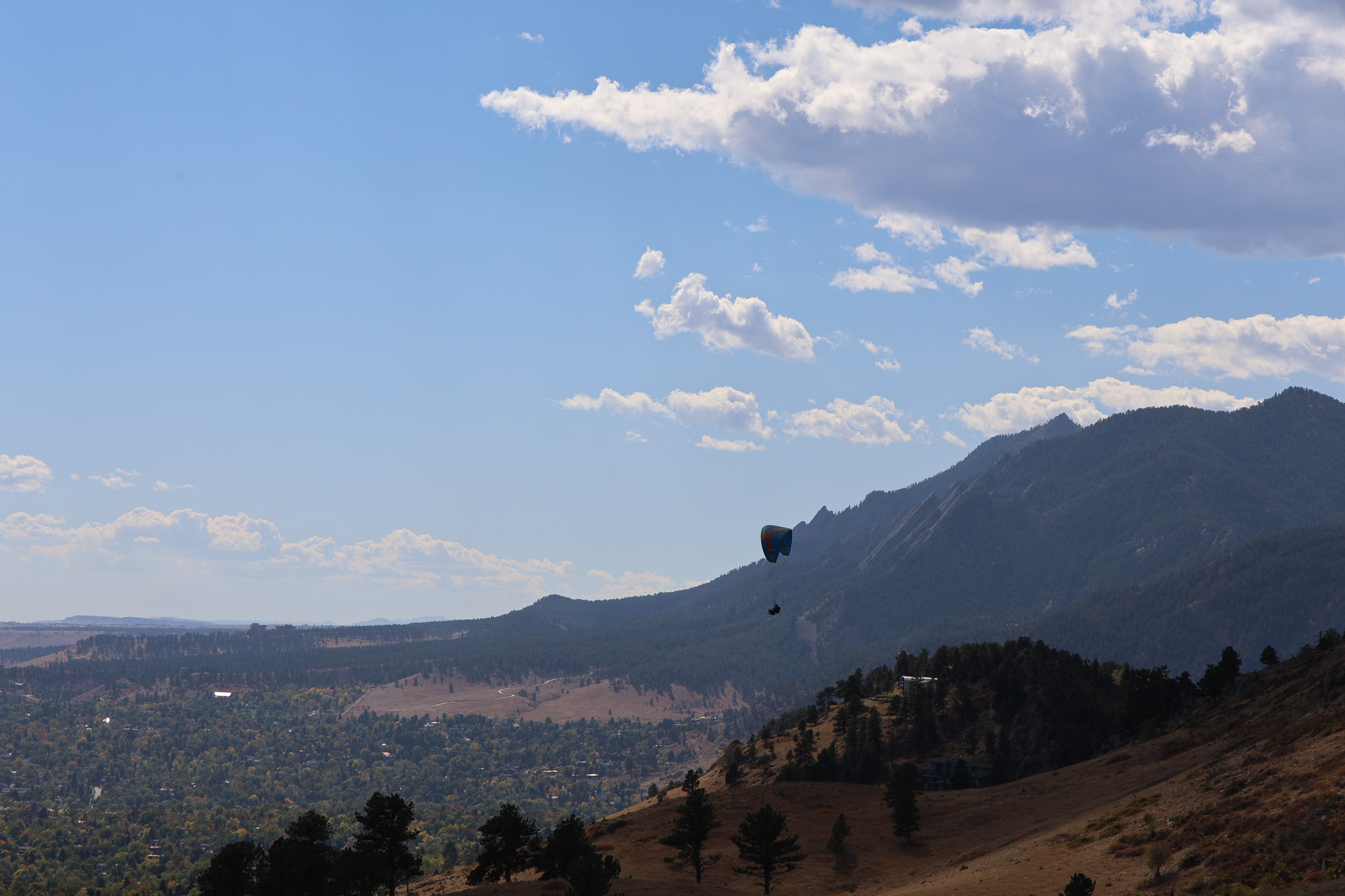
On a bluebird morning in early October, about 10 people trickled into the parking lot at Foothills Community Park, dragging backpacks the size of small refrigerators in every possible day-glow color. They traded the usual small talk: how the week went, who was finally renovating their kitchen, and how they took the day off work to be there.
These people were pilots-in-training with Red Tail Paragliding, a Boulder outfitter and academy, and their experience ranged from several years in the sky to a second or third flight.
Daniel O’Connor was one of the novices, with two flights to his name. A former small-plane pilot, he took up paragliding because he still wanted the sensation of flying, only cheaper and more exhilarating. He said he wasn’t especially nervous. The flying itself, he says, is "surprisingly pretty simple."
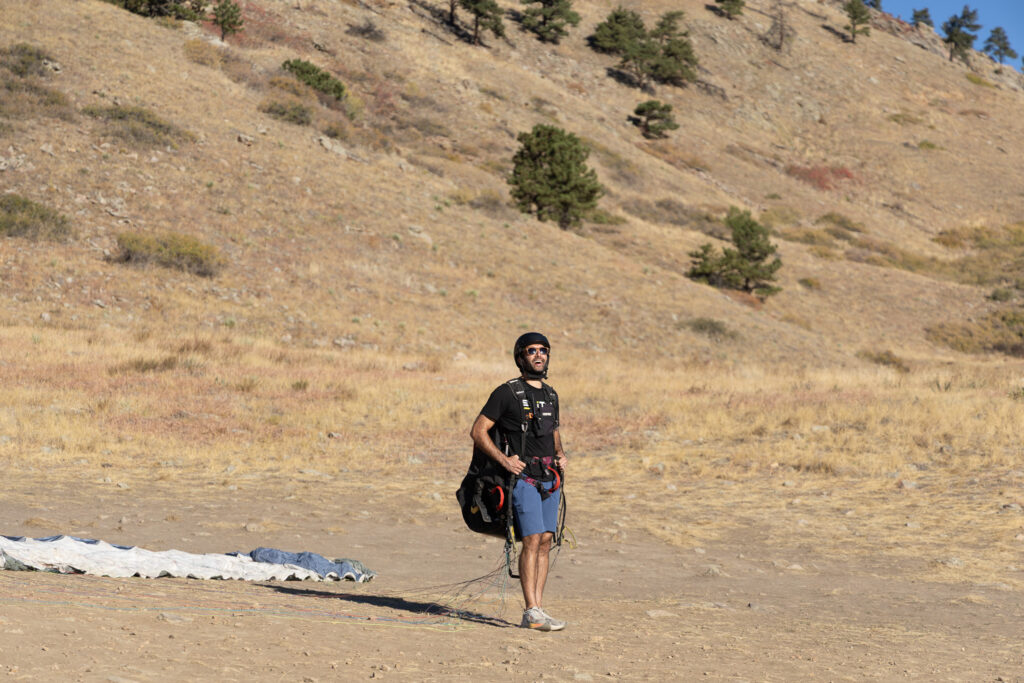
Daniel O’Connor prepares to launch above Foothills Community Park in Boulder, Colo.
The hill has three launches: lower, three-quarters and upper. Beginners, like O'Connor, practice at the lower launch. The more experienced pilots take a steep 20-to-30-minute hike to the higher launches.
At the top, they spread their wings, checking for tangled lines and intact harnesses. Then the waiting begins.
Everyone mostly watched for the wind, glancing back at the windsock and a ribbon on the ledge that seems to owe them money while they traded stories of recent flights, new gear and upcoming trips.
Once the wind shifted, the next pilot stepped up. They lift their wing and run toward the lip of the hill until the air finally catches, carrying them out over the slope and down toward the Foothills Community Park soccer fields.
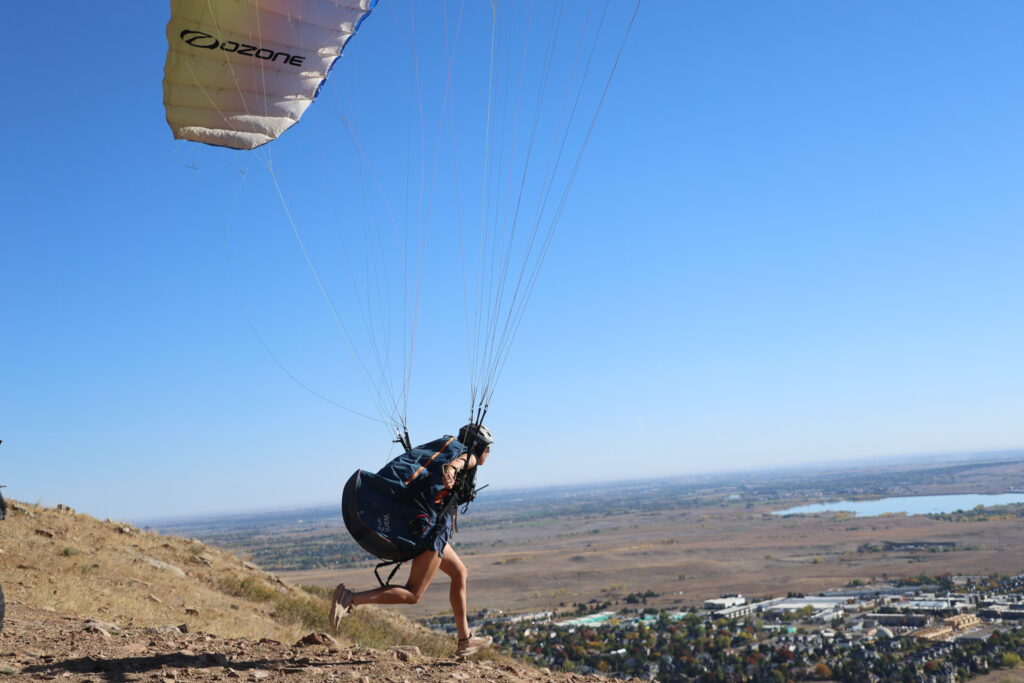
A Red Tail Paragliding student runs downhill to take off above Foothills Community Park in Boulder, Colo.
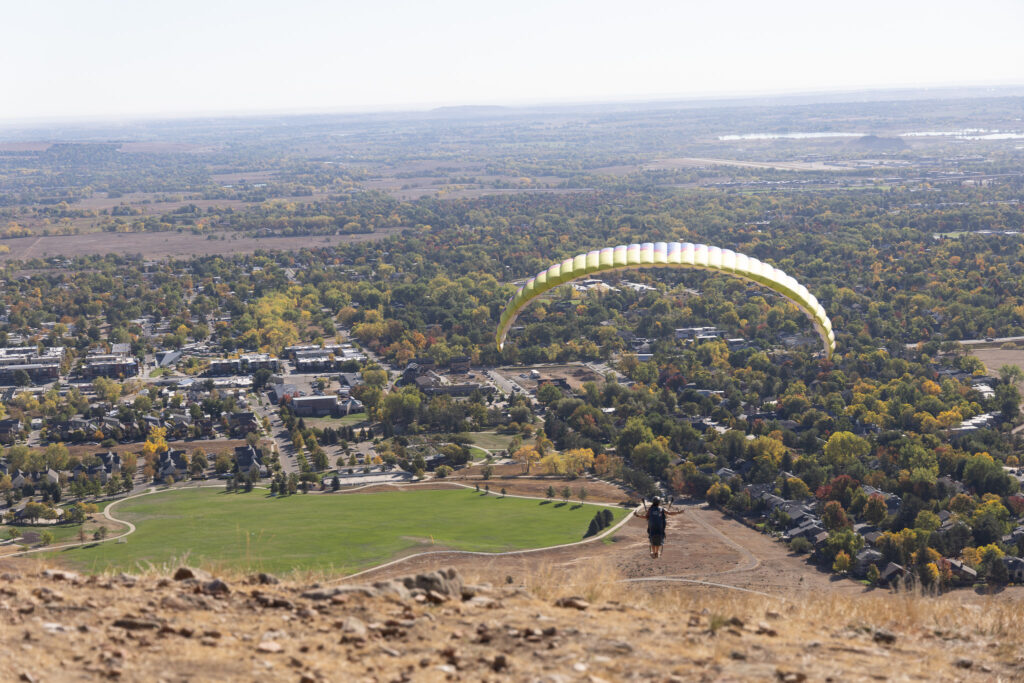
A Redtail Paragliding student flies above Foothills Community Park in Boulder, Colo.
Almost everyone on the hill learned or is learning from Red Tail, which Misha Banks, a Boulder native, founded in 2019. Banks, who has more than 4,000 flights around the world, came to the sport through his father, who was part of the first wave of American paragliders in the 1990s. Banks first paraglided at 18 with his father. The flight lasted only five minutes before dizziness and nausea brought them back to the ground.
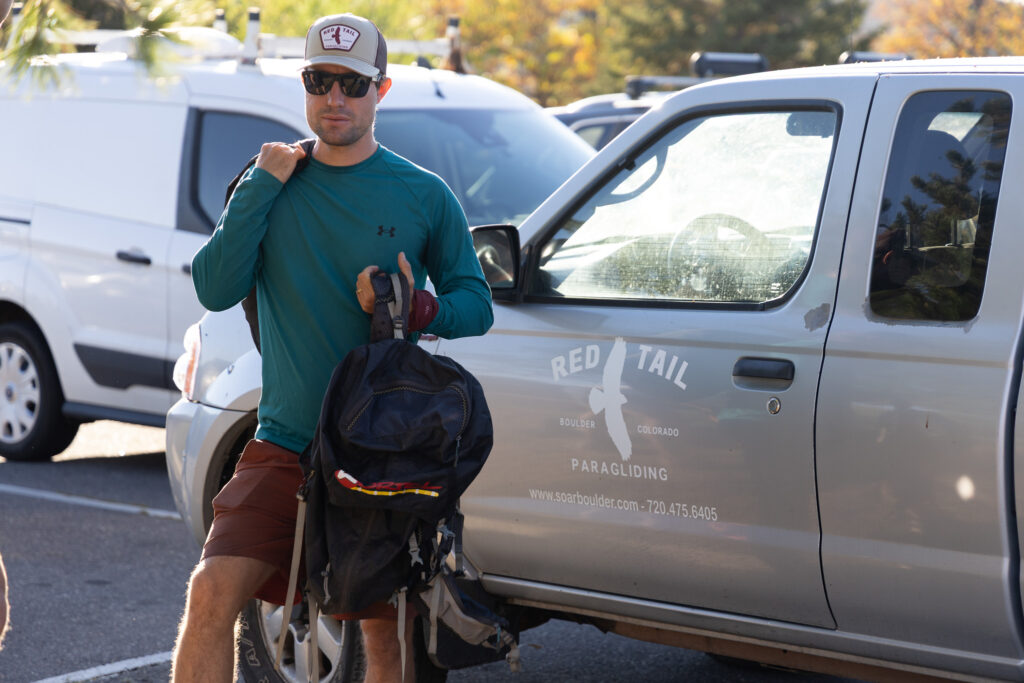
Misha Banks, founder of Red Tail Paragliding, stands in the parking lot in Boulder, Colo., preparing his gear before heading out to fly.
He has long since gotten over the motion sickness. Now a rated pilot for more than a decade, Banks still calls the sport “a crazy witchcraft.”
"The fact you can get in that thing and soar up thousands of feet over the ground, and you just see the world from this crazy perspective where you kind of see time almost stand still," he said. "It's kind of philosophical in the way you get to look down at the world and just kind of ponder it."
Keeping the launches organized and safe was Brian Doub, an instructor who has flown for 23 years and taught for 10, whose calm voice and presence recalled a Bob Ross painting tutorial.
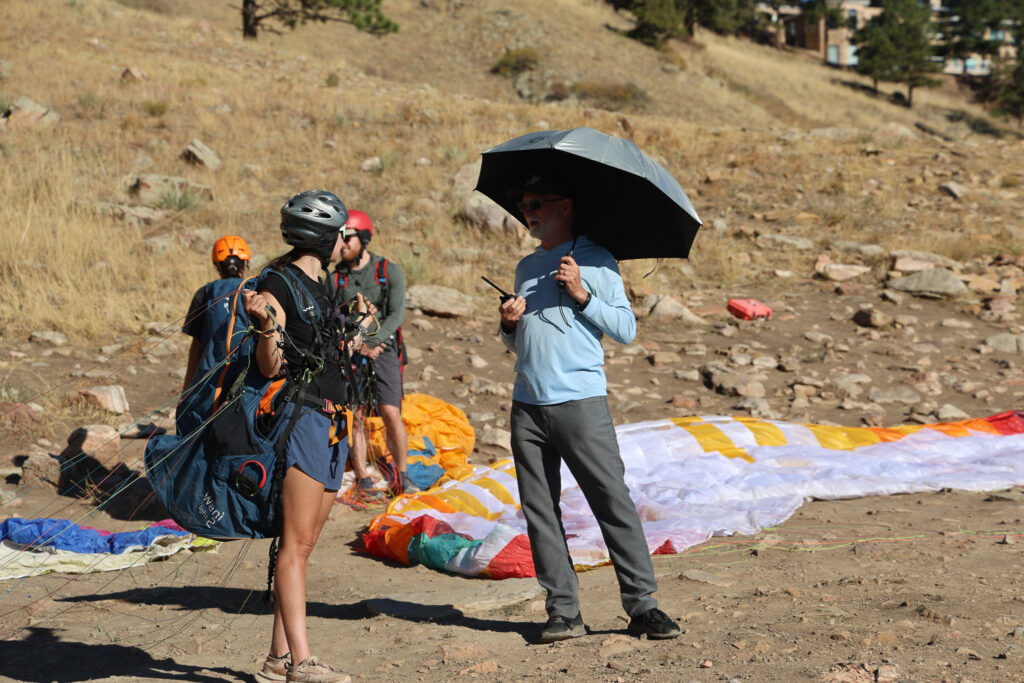
Brian Doub, an instructor with Redtail Paragliding, works with a student at the hillside launch above Foothills Community Park in Boulder, Colo.
A birthday marketing “taster” from his wife got Doub into the air in northern England, and the feeling kept him there.
"Well, one thing is the freedom," he said. "The other thing is that a lot of people think it's jumping off a hill, but it's not. … It's actually flying, and you get all the elements in your face, and that's just fantastic."
Teaching, though, is a different job.
"To make good, safe decisions all the time is pretty difficult," he said. "You have to make decisions for [the students], even when they don't understand. That can be a challenge at times. They're wanting to do some things, and they don't understand that it's beyond their abilities."
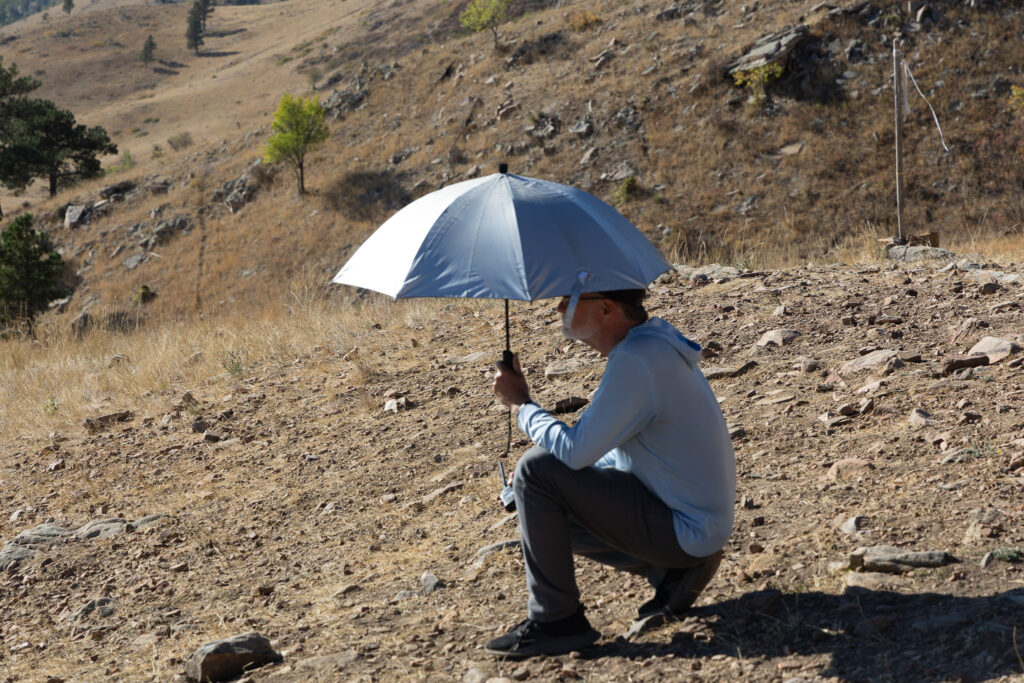
Doub watches a student fly toward the soccer fields at Foothills Community Park in Boulder, Colo.
Donald Knight, a Boulder structural firefighter and former Red Tail student, was flying that morning. Knight remembers his own early nerves.
"I was very nervous in the beginning, and then you start to kind of understand what the wing's doing, and that really helps calm you down," he said. "Even now, if I still get scared in the air, I just stop, take a minute, breathe to remember that I know what I'm doing."
For both Banks and Doub, teaching students like Knight and O'Connor to feel the same freedom they feel in the air is immensely rewarding. For Banks, it's also a way of going back.
"There's obviously a lot of pride in helping someone get there, but you just remember your own first flight that you ever took and just like, how insane it is," he said. "Sometimes I feel like a bit of a vampire, just sucking all the stoke out of my students because you get to relive that first flight over and over again with them."
Doub sees the payoff in the work itself and in the community around it.
"You see the hard work they put into it, and not only are they getting the reward of that hard work, but you're getting that as well," he said. "Community out here is really good, very, very close."
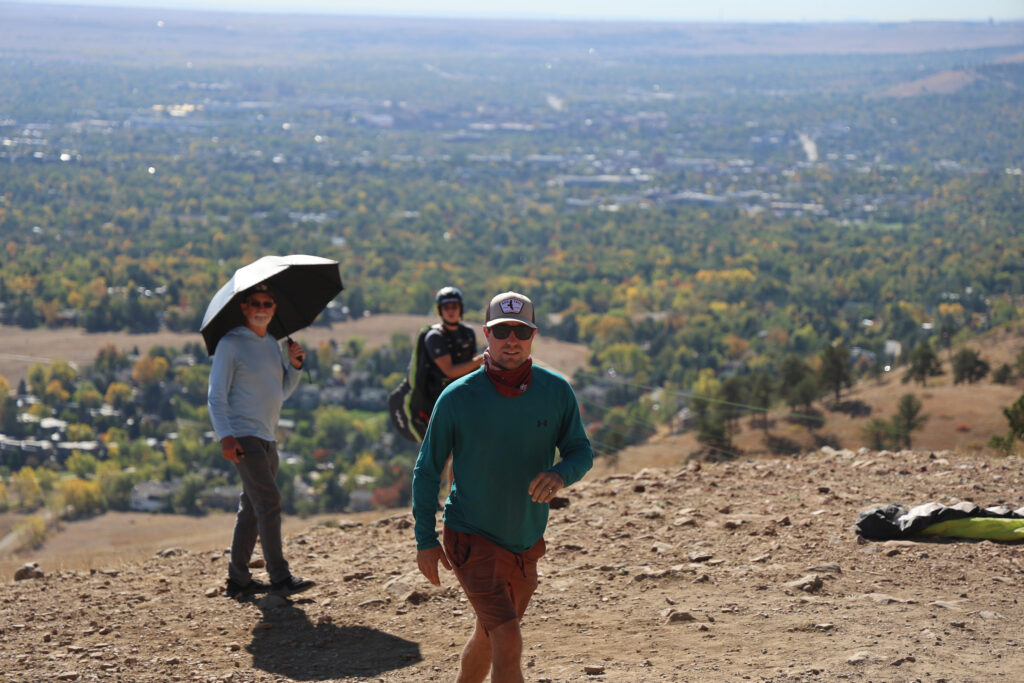
Banks and Doub stand at the top launch above Foothills Community Park in Boulder, Colo.
Paragliding remains a niche sport in the U.S., far less popular than in Europe, and Banks points to land access. Unlike in Europe, American pilots can’t simply launch from any public hillside. They generally need a site their local government has sanctioned, or private land, and in Boulder, a history of rule-breaking by a few early pilots has kept those sites limited, according to Banks.
“Launch access and landing access, having a reliable, safe launch and landing together, is definitely a big factor in the sport’s inability to grow,” Banks said.
Foothills Community Park has a good landing zone, but it gets congested as Boulder’s one true training site. “There are so many amazing flights here to be had, you just can’t legally launch.”
Down at the lower launch, O'Connor's day started slow. But after several attempts to get off the ground that failed due to unpredictable wind patterns, he finally lifts off and completes his third flight.
The feeling everyone on the hill is chasing is hard to describe, but Doub comes close.
"Once you get your feet off the ground for the first time, you realize you're not supposed to be here, but you are," he said. "And I like that."