

By Mary Kaye Seckler
American Mah Jongg. It used to be a game played mainly by little old ladies in New York City, primarily Jewish, according to folklore. Now, in towns as small as Berthoud, Mah Jongg games can be found almost any day of the week, and anyone seeking good, if challenging, fun is welcome. It is a game of luck, strategy and skill, best described once by Julia Roberts on a late-night talk show. I’ll paraphrase: It’s a game where order is made from chaos using tiles. Brilliant. Simple. The devil is in the details.
Mah Jongg developed in 19th-century China, spreading globally in the early 20th century. Joseph Babcock, an American in Shanghai, helped popularize it in the West. Today, it’s played by hundreds of millions worldwide and has become a major online game as well. It’s different from the matching game you play on your phone.
Mah Jongg isn't just one game either—it's a family of games with regional twists. The goal of the game is to be the first to complete a legal hand. Various versions define a legal hand differently, which is why Mah Jongg has so many flavors. The most commonly played version in this country is American Mah Jongg, with Chinese being a distant second.
It’s a highly social game, typically played with four players per table. Each group has its own traditions, often involving snacks, frosty beverages and hosting duties. Since it’s typically played for hours at a time, snacks are essential—extra credit for wine and chocolate.
American Mah Jongg is played with a copyrighted card issued by the National Mah Jongg League. Each player needs their own card to play. They are issued annually, with orders taken in December for cards delivered in April. Printed with multicolored letters and numbers representing hands, it’s divided into categories such as Consecutive Run or Winds and Dragons. The first time you encounter a card, it looks like some strange sci-fi code.
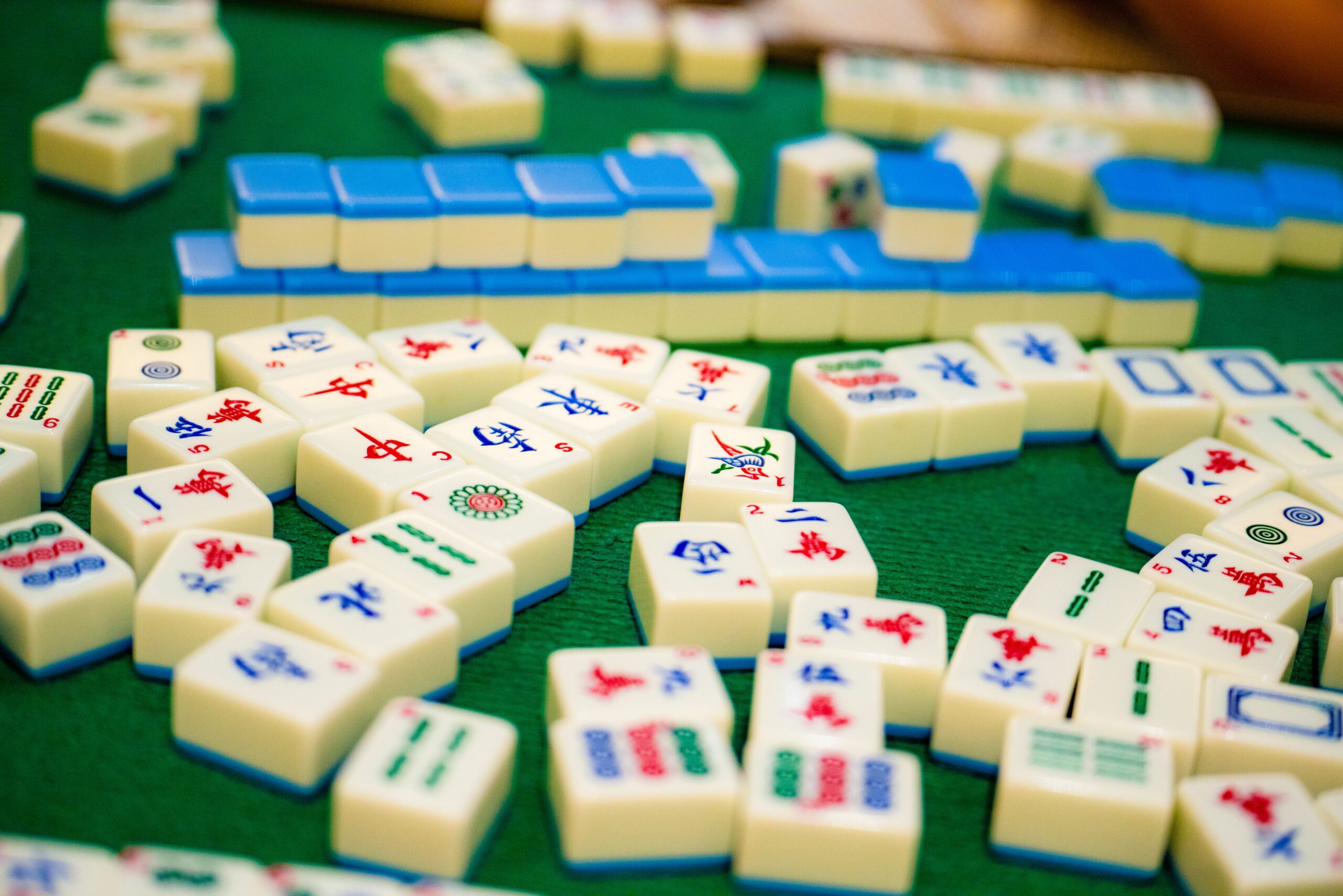
These are the roughly 55 legal hands you will play for one year. And you will never get bored. Tiles range from simple to sublime, often costing hundreds of dollars or more for a premium set. Instead of hearts, diamonds, clubs and spades, suits are bams (bamboo), cracks (characters) and dots. Winds, Dragons, Flowers and Jokers further complicate things for a beginner.
I found the game challenging to learn, but I’ve taught players who caught on like ducks to water. And once they do, they often become obsessed, playing online into the wee hours of the morning. Then, just when they’ve studied the card, memorized most of the hands and become relatively proficient, a new card is issued and we’re all back to square one. I promised you’d never get bored. But in the meantime, you’ve learned some strategies that will serve you well, year after year.
A really talented player like Margo Miller knows all the tricks.
As a retired teacher, she began playing in 2012 at a 55-and-older community in Arizona. In recounting her introduction to the game, Miller described it as: “Nerve-wracking! Intimidating!” She didn’t feel proficient for six months. By then she was hooked.
Since that time, Miller has taught dozens of students to play, and most describe their intro to Mah Jongg just like she does: stressful. But even then, only one student Miller has taught quit the game so far.
As a veteran player, she claims
“I’m happy if I walk away from an afternoon having won one game,” Miller, now a veteran player, said. However, she usually exceeds that number. Mah Jongg is about 70% skill and 30% luck. When you fail at Mah Jongg, it’s common practice to blame it on the lack of jokers in your hand.
Miller’s best advice for new players is to “Be patient with yourself.” It takes time to learn the basic rules of the game, like no jokers with a pair, as well as the flow of the game—building the walls, playing the Charleston, choosing a hand to play.
She enjoys the annual card change of American Mah Jongg, but when asked about her love for the game, Miller responded: “The social aspect.” A veteran player, she prefers a more relaxed pace compared to the fast and furious pace of tournament play.
To speed up the learning process, she suggests playing online at MYJONGG.net. The site offers four free games a day per player. A year’s membership is $40, which affords you the ability to play unlimited games with friends, strangers, or even bots. The bots are especially good at teaching you humility in addition to Mah Jongg.
If you want to learn to play, just ask around. I found my group by asking one morning at pickleball. “Do you know anyone who plays Mah Jongg?” I asked Miller one morning between matches, and the rest is history. We have a regular game with between four and 12 players depending on availability. And we teach more to play every day.