
“Solidarity, not charity.” At its most basic level, that’s how proponents describe mutual aid. Though historically associated with leftist causes, mutual aid is, at its core, about people helping one another — a concept that transcends politics, religion and culture.
“Everything that’s happening is about neighbors helping neighbors,” said Silas Atkins, a South Boulder resident and community building. Unlike traditional nonprofits, “there’s no cost of doing business, no rent to pay. The ideal mutual aid is you are creating a community with others. You really don’t need money to do that.”
What is it?
The term mutual aid was originally coined in 1902 by anarchist philosopher Peter Kropotkin, who used it to counter the prevailing Darwinist theory of survival of the fittest. Kropotkin noted countless examples of cooperation and reciprocity among humans and other animals.
Mutual aid is predicated on the idea that sharing excess and collaborating with others will strengthen communities. Groups generally organize their group horizontally, meaning there is no member with authority over another.
Solidarity and providing without judgement are basic tenets. There is no need for something to be “reciprocated” or “transacted” when you show up to a distribution (often referred to as distros). Rather than relying on large donors or government grants, mutual aid groups use shared resources to redistribute essential goods, food and education.
What does it look like?
Practical uses of mutual aid had great success through civil rights movements and natural disasters. The Black Panther Party started the nation’s first free breakfast program for school children. Mutual aid groups provided counseling and pro bono legal services to targets of legal persecution after the Stonewall Riots of 1969. For poor families who lacked resources when Hurricane Katrina hit New Orleans in 2005, emergency response was provided for them via other residents.
A global crisis brought mutual aid out of leftist circles and into the mainstream. During the COVID-19 pandemic, Americans helped their neighbors by providing nonperishable food, medicine and protective equipment to those who needed it, free of charge and without qualifications.
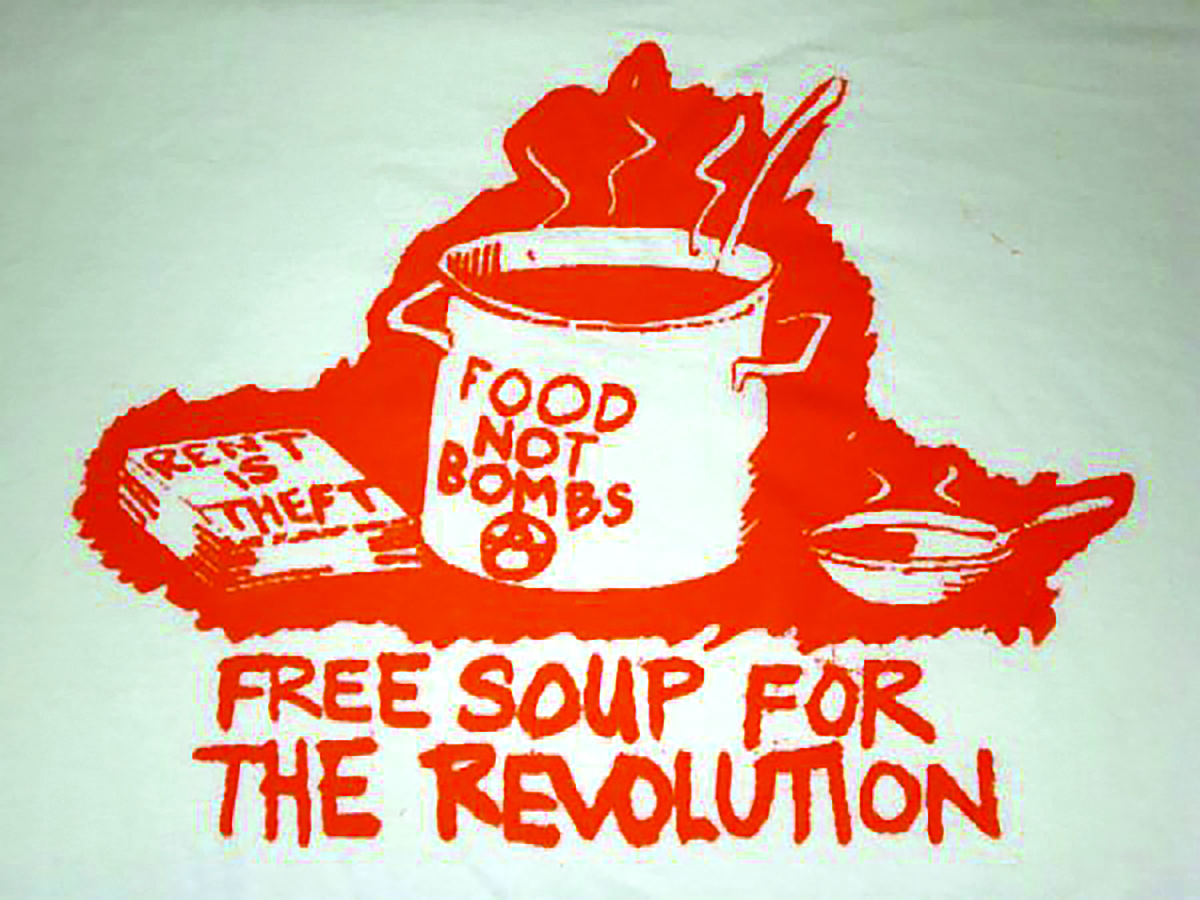
Throughout COVID, Boulder mutual aid groups like SAFE, Food Not Bombs and Boulder Food Rescue distributed medical supplies alongside food and other essentials. More community members joined these groups to show solidarity and learn new skills during the idle lockdown time.
Renewed interest
The Trump administration resulted in a huge spike of interest in Food Not Bombs, said member Justin Schwartz. That’s so far been true for Trump 2.0 as well.
“People are really scared right now,” added Hayden Dansky, co-founder of Boulder Food Rescue, which provides in-need communities in Boulder with fresh produce and food, free of charge. “It just reminds me why this work is so important.”
Food Not Bombs, SAFE and Boulder Food Rescue have also seen an uptick in their community participants, members said.
“I feel like I’ve been beating the drum that fascism is on our doorstep for a really long time, and now that it’s very out in the open, people can see it,” Schwartz said. “People are looking for a place to feel like they have some semblance of political control, and community organizing and activism feels like a place where you can take that back.”
Mutual aid’s expansion includes new programs that challenge Trump administration actions of targeting marginalized persons in our communities. Colorado Immigrants Rights Coalition, or CIRC, offers a volunteer program that follows U.S. Immigrations and Customs Enforcement (ICE) activity via community tracking and reporting.
“The goal is to give people a one-stop shop where they can confirm whether or not there is actually ICE activity,” said Raquel Lane-Arellano, communications manager at CIRC. “The biggest goal is to share information, not to spread fear.”
‘Making banana bread’
Locally, groups distribute food, medical supplies and other life-sustaining necessities to those in need. That often means people experiencing homelessness.
SAFE Boulder has handed out dozens of sleeping bags, tarps and tents each year since they began their work in 2018. Tents and sleeping bags are illegal under Boulder’s anti-camping law, and distributing those supplies has been criticized by city officials. SAFE completely opposes the camping ban, saying anti-camping laws unfairly target unhoused Boulder residents.
“Especially in the winter months,” said Chilly, a member of SAFE Boulder who preferred to use a pseudonym, “what we provide is essential for survival.”
Those who frequent mutual aid groups are prone to having extreme and pointed views on authority, and disagreements between mutual aid organizations and local government entities are common.
All are welcome at Food Not Bombs, which tries to put the tangible impact of what the group does above political disagreements.
“There can be a culture shock when people come in and they’re like, ‘I’m a radical leftist, and I do this and this and that,’” Dani said. “And that’s great, but we’re making banana bread. When folks end up relying on you and you become a resource, you have to put the objective of the day as the priority.”
“Wherever you’re living in the world,” added Schwartz, “there’s a mutual aid group that would love to have your volunteership.”
Local mutual aid organizations
Boulder Food Not Bombs
Free meal at the Boulder Bandshell (1212 Canyon Blvd.);
Saturdays at 3 p.m.
Instagram: @boulderfoodnotbombs
Boulder Food Rescue
No-cost grocery program connecting in-need communities.
Website: boulderfoodrescue.org
Climatique
Boulder-based climate action magazine representing Boulder locals.
Website: climatique.earth/
Instagram: @climatiqueNOW
Check out their fantastic resource, A Beginner’s Guide to Changing the World
SAFE Boulder County
Distributes hot meals, survival and medical supplies at 1056 Boulder Canyon Dr.;
Tuesday 6-7:30 p.m., Wednesday 5:30-7:30 p.m., Thursday 5:30-6:30 p.m.
Instagram: @safeboulder
The Wagon People
Free food at the King Soopers (2255 Main St.) in Longmont;
Saturday at 2 p.m.
Instagram: @thewagonpeople.co
Two Guides Mutual Aid
Redistributing hot food, donated food and hygiene products
Instagram: @twoguidesma
Transcontinental Pipeline
Helping transgender, queer and LGBT individuals move from unsafe/unaccepting environments within the U.S. to Colorado
Website: tcpipeline.org