
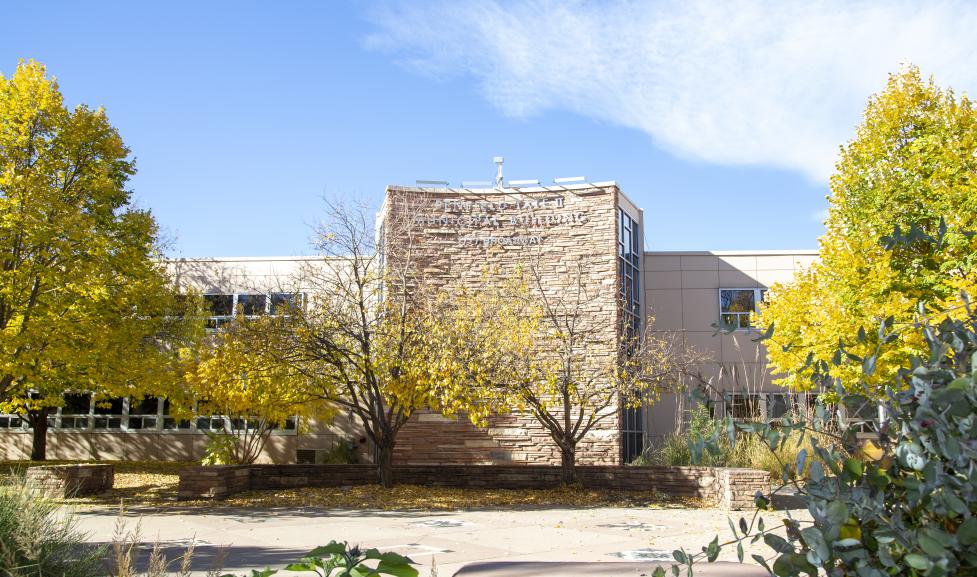
The Penfield Tate II Municipal Building, where Boulder's city council meets. Courtesy: City of Boulder
Boulder City Council
At the May 8 study session, council will:
- Discuss the financial forecast for 2026. Sales and use tax, the city’s largest source of revenue, has slowed. From 2020 to 2023, there was an average growth rate of 9.2% compared to flat year-over-year growth between 2023 and 2024, according to a city memo. That, combined with economic uncertainty at the federal level “will limit budget flexibility for new, additional ongoing programs and services in 2026,” staff wrote in notes to council.
- Discuss potential ballot items for the November 2025 election, including:
- The creation of a vacancy tax or fee intended to increase affordability and occupancy of housing stock by placing a fee or tax on homes that sit vacant for all or part of the year, including second homes. Vacancy taxes are intended to “reduce blight by incentivizing property owners to improve, rent, or sell vacant property,” according to the memo.
- Changes to boards and commissions, similar to the measure on the 2024 ballot that gave city council more control over the groups but excluding provisions that would have given council more power to remove members. The 2024 measure failed by less than a 1% margin.
- An extension of the 0.3% Community, Culture, Resilience & Safety (CCRS) sales and use tax, either permanently or until 2050. According to the staff memo, the tax would “create a longer-term support for city capital infrastructure, renovation, replacement, and maintenance projects and non-profit capacity building and capital investments.” The existing CCRS tax runs through 2036 and has supported projects such as the East Boulder Community Center, Pearl Street Mall improvements, fire station renovations and “critical” bridge replacements. An extension through 2050 would generate up to an additional $210 million, according to the memo.
- The creation of a public realm tax, which staff estimate would generate an additional $7 million in property tax revenue. The measure would more than double the permanent parks property tax from 0.9 mills to 2.252 mills — increasing property taxes by an estimated $80-90 for a $1 million home — and broaden how the tax can be used. Currently, it can only be used to purchase land for parks or make permanent improvements to parks and rec facilities. Under a new measure, the money could be used for parks, open space, civic buildings and areas, and streets, sidewalks, bike lanes and multi-use paths, according to the memo.
After the study session, staff will draft ballot measures. Two public hearings are scheduled for July 24 and Aug. 7, with a potential final vote at the Aug. 7 meeting.
Boulder County Commissioners
On Friday, May 2:
- Members of the public can take a walk with Commissioner Marta Loachamin from 9-10 a.m. Pella Crossing 11600 N. 75th St., Longmont. This event is “a chance to chat with a commissioner less formally and have a one-on-one conversation (time permitting).” Registration required: bit.ly/WalkWithMartaBW
On Tuesday, May 6 commissioners will:
- Hold an in-person town hall at 5:30 p.m. at the Boulder County Parks & Open Space Department, Prairie Room, 5201 St. Vrain Road, Longmont. Town hall meetings are not web streamed, and registration is not required. There will be a 10-minute staff presentation on the evolution of Parks & Open Space over the department’s 50 years. At the town hall, community members can discuss parks and open space or other topics in a less formal setting than a public hearing.
All agenda items are subject to change.