

When a Chicago-sized chunk broke away from the melting George VI Ice Shelf in Antarctica earlier this year, it revealed an untouched world teeming with life. Sealed beneath the frozen surface for centuries, the underwater ecosystem was discovered as home to a dazzling menagerie of icefish, octopi and sea spiders — but its most notable resident was a rare, mysterious and massive deep-sea jellyfish: Stygiomedusa gigantea, the “giant phantom jelly.”
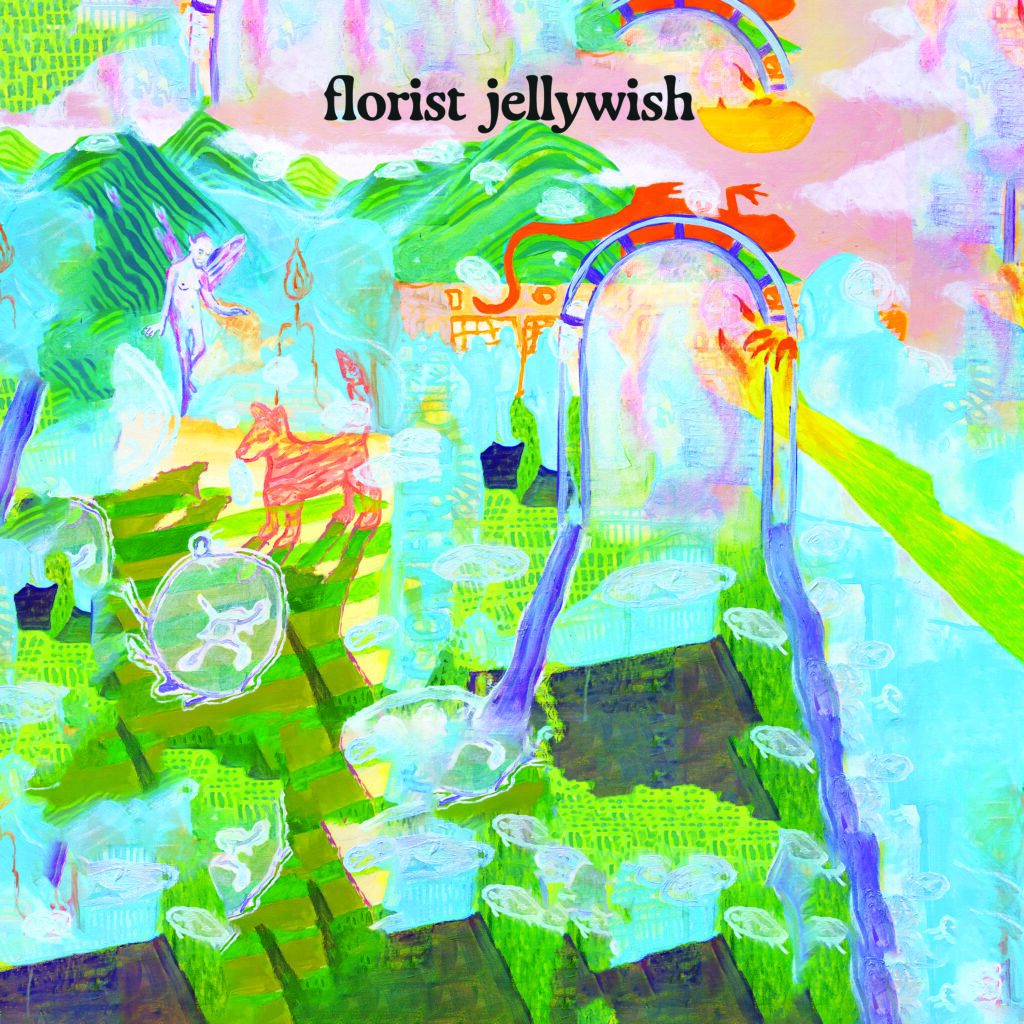
This nexus of natural wonder and planetary peril is where Emily Sprague spends much of her creative energy. As the driving force behind the critically lauded New York indie-folk outfit Florist, she’s built a career unpacking thorny existential quandaries with a hushed reverence for the miracle of the world around us. On Jellywish, the band’s pristine fifth studio LP released last month via Double Double Whammy, she found inspiration in the deep.
“We wanted the recordings to embody this sense of being of the Earth, but being strange in subtle ways — very flowing and simple, but slightly more complicated, with something underneath the surface,” Sprague, 30, says. “So the jellyfish became this sort of icon for us to talk about how we wanted the songs to ultimately sound. It encouraged us to try and step outside of the boundaries a little bit while also still being this very earthly, tangible thing that can go translucent and slip into these more philosophical or ethereal, metaphysical kind of realms.”
That might sound a bit heady, but the 10 tracks comprising Florist’s tight and tidy new collection bear little resemblance to a brain-scrambling philosophy lecture. In true fashion, the songs murmur like a gentle stream across blooms of acoustic guitar, shimmering piano and soothing ripples of ambient noise. All the while, Sprague’s quietly trippy lyrics and sugar-sweet melodies spin small wonders into big questions: “Some things just don’t make any sense, like the jellyfish,” she sings early on. “Remember when all of this was just a dream?”
“It’s about our own interpretation of what our consciousness is and where our moral and personal guides end and begin,” Sprague explains. “It’s not dogmatic, but it is calling out the ways we live our life that maybe don’t serve us, and trying to put a spotlight on things I feel could help us make a better place for life on Earth.”
Memento mori
Sprague’s wide-eyed awe for our earthly realm first began to germinate during her early years daydreaming in the foothills of the Catskill Mountains in upstate New York. As an only child, she spent much of her time alone among the timbered hills and rolling creeks of the Appalachian subrange — absorbing its sounds, and keeping them near her heart.
“It was my closest and most important relationship when I was growing into a human with a brain. It’s a huge part of my life,” she says. “I live near the same place now, and I still feel its presence really strongly. And I feel for our destruction of it.”
On the band’s prior 2022 self-titled double album, this connection to our fragile environment bled through in field recordings from their live studio sessions while living together in a remote house near Sprague’s childhood home. But on Jellywish, while the tracking process was much the same, the result is less improvisational and more urgently tinged with anxiety. “Will there still be winter in a year?” Sprague wonders in one closing verse, before answering: “Nothing is guaranteed but death.”
“Death is a huge part of my life and my mind. It is sort of a character on this record that exists almost benevolently,” she says. “I don’t ever feel like there’s the fear of death in these songs. It’s more of an embrace.”
‘Your life is important’
Part of Sprague’s measured response to forces beyond her control grows from an expansive view of what we might call the soul. Stitched together by the idea of a collective consciousness, Jellywish asks us to consider ourselves in relation to the vibrant signs of life blooming in the darkened corners of the everyday. If we can manage that, she hopes, then maybe we can secure a future for the only planet we’ve got.
“I’m kind of an animist. I believe it’s all alive. Everything is real. And we have such a disrespect for that,” she says. “Writing songs feels like the most actionable way I can have my own drop in the bucket — not telling anyone what to do, but just to plant the thoughts. I guess that’s my attempt at trying to make a tiny little difference. I’m not optimistic, but in the grand scheme of things, I’m an active nihilist. I still believe we can and should try.”
Whether or not our collective efforts can save a biosphere on the brink, Sprague’s stubborn insistence on the quiet marvel of being alive offers a radical path for our lives together on the membrane between this world and whatever comes next.
“I’m trying to find this sense of music that makes you feel as if your life is important — your feelings are important, the people you know are important,” she says. “But at the same time, it’s so wonderful that we all die. We have this relationship to the universe that is so natural and chaotic at the same time. We are very avoidant of that within this Western capitalist way of living. It feels like it’s something else completely. But it’s strange, because we’re so clearly here on planet Earth.”
ON THE BILL: Florist with Allegra Krieger. 7 p.m. Friday, May 23, Meow Wolf, 1338 1st St., Denver. $27